KFactor vs UMF vs MGO: Mānuka Honey Grading Systems Compared
December 20, 2022
Share this post


Mānuka honey is valued for its unique characteristics, but not all products use the same grading system. Depending on the supplier, you may see ratings such as UMF™, MGO, NPA or KFactor on product labels.
While these systems can help buyers assess Mānuka honey, they do not all measure the same characteristics. Some focus on methylglyoxal (MGO) concentration, while others consider additional markers of authenticity, quality or antibacterial activity.
Understanding these differences is important when comparing Mānuka honey products, particularly for businesses sourcing honey for retail, wholesale or private label applications.
What Are the Main Mānuka Honey Grading Systems?
The most commonly encountered grading systems and measurements include:
These systems serve different purposes. A rating of 15+ in one system does not necessarily represent the same characteristics as a similar number in another.
What Is the UMF Mānuka Honey Grading System?
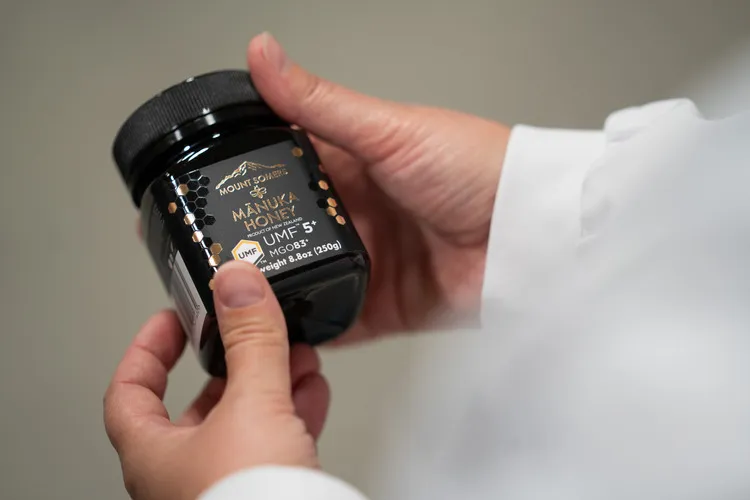
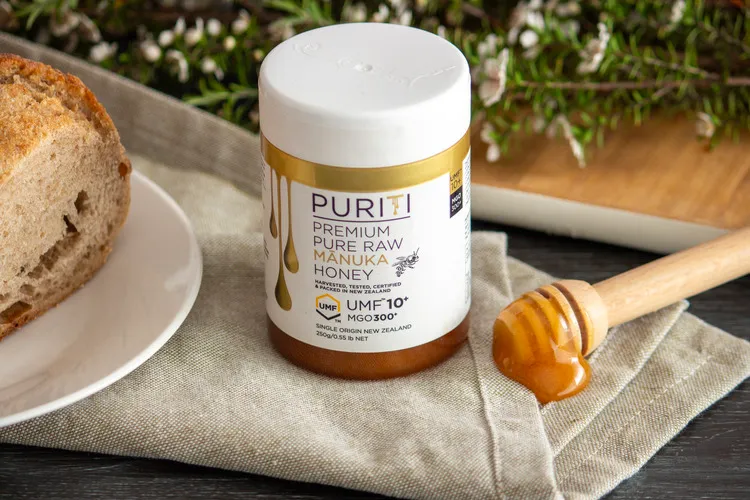
UMF™, or Unique Mānuka Factor, is an independent certification and grading system administered by the UMF Honey Association in New Zealand.
It assesses four factors:
- MGO (Methylglyoxal): A naturally occurring compound associated with Mānuka honey's non-peroxide antibacterial activity.
- Leptosperin: A naturally occurring compound used as a marker of Mānuka authenticity.
- DHA (Dihydroxyacetone): A compound that contributes to the development of MGO over time.
- HMF (Hydroxymethylfurfural): A marker used to assess the effects of heating and ageing on honey quality.
By assessing these factors, UMF certification provides buyers with information about Mānuka honey authenticity, quality and grading.
UMF grades such as 5+, 10+, 15+ and 20+ allow buyers to distinguish between products with different minimum MGO concentrations, provided they meet the additional requirements of the certification system.
For a detailed explanation of the system, see What Does UMF Mean?.
What Is an MGO Rating in Mānuka Honey?
MGO stands for methylglyoxal, a naturally occurring compound found in Mānuka honey.
An MGO rating indicates the measured concentration of methylglyoxal in milligrams per kilogram (mg/kg) of honey.
For example:
- MGO 100+: At least 100 mg/kg of methylglyoxal.
- MGO 250+: At least 250 mg/kg of methylglyoxal.
- MGO 400+: At least 400 mg/kg of methylglyoxal.
- MGO 550+: At least 550 mg/kg of methylglyoxal.
Higher MGO ratings indicate higher concentrations of methylglyoxal. However, a higher MGO concentration should not automatically be interpreted as evidence of greater health benefits.
MGO testing provides a useful measurement when comparing product specifications. However, an MGO rating alone does not verify all aspects of Mānuka honey authenticity or quality.
This is an important distinction between MGO and UMF. MGO is one of the measurements included within the broader UMF certification system.
What Is KFactor in Mānuka Honey?
KFactor™ is a proprietary Mānuka honey classification system developed and used by Wedderspoon. Historically, it was associated with Mānuka pollen content and additional quality assurances, including traceability and product origin.
Unlike UMF and MGO, KFactor did not directly measure methylglyoxal concentration.
Wedderspoon has since announced a transition from KFactor to MGO ratings:
- KFactor 12 is now labelled MGO 50+.
- KFactor 16 is now labelled MGO 150+.
According to Wedderspoon, the honey, quality and source remain unchanged. The new labels provide a clearer indication of MGO concentration.
These changes reflect Wedderspoon's product range rather than a universal conversion between KFactor and MGO. Buyers comparing Mānuka honey products should refer to current MGO specifications, laboratory testing and relevant certifications.
For more information, see Wedderspoon's explanation of its transition from KFactor to MGO.
What Is NPA in Mānuka Honey?
NPA stands for Non-Peroxide Activity. It refers to antibacterial activity that remains when the contribution of hydrogen peroxide is excluded.
Most honey can exhibit antibacterial activity through several mechanisms, including hydrogen peroxide production. Mānuka honey is recognised for its additional non-peroxide activity, which is strongly associated with methylglyoxal.
NPA has historically been used to express this activity through laboratory testing, often by comparing results with a reference standard.
Although NPA and MGO are related, they are not identical measurements.
- MGO measures the concentration of methylglyoxal.
- NPA describes non-peroxide antibacterial activity.
Some laboratory methods estimate NPA from MGO concentrations, but these results should not be treated as interchangeable without understanding the testing method.
NPA also does not independently confirm the floral authenticity or origin of Mānuka honey.
Some products also use Total Activity (TA) or Bio Active ratings, which can include peroxide-based activity. This can create confusion for buyers.
For example, a product labelled Bio Active 24+ with an MGO rating of 80+ should not be mistaken for UMF 24+ honey. These ratings measure different characteristics and are not directly comparable.
Some Mānuka honey brands have moved towards MGO or UMF labelling to provide clearer grading information. For commercial buyers, checking the actual MGO concentration and supporting certifications is more reliable than comparing grading numbers alone.
Can Different Mānuka Honey Grades Be Converted?
Some relationships exist between grading systems, but not all ratings can be directly converted.
For example, UMF grades have defined minimum MGO requirements, allowing buyers to compare the MGO component of UMF-certified honey with an MGO-labelled product.
However, meeting a particular MGO concentration does not automatically qualify honey for UMF certification. Additional testing and certification requirements must also be satisfied.
Similarly, proprietary systems such as KFactor cannot be reliably converted into UMF or MGO ratings.
For businesses comparing different products, the most dependable approach is to evaluate the underlying laboratory results rather than relying solely on grading terminology.
Are Mānuka Honey Grading Systems the Same as MPI Requirements?
No. Commercial grading systems and New Zealand's regulatory requirements serve different purposes.
The Ministry for Primary Industries (MPI) has established a scientific definition for Mānuka honey exported from New Zealand.
This definition uses four chemical attributes and a DNA marker to determine whether honey meets the requirements for monofloral or multifloral Mānuka classification.
These requirements are separate from commercial grading systems such as UMF, MGO and KFactor.
For buyers, this means that a product's advertised grade should be considered alongside evidence of its Mānuka classification, authenticity and traceability.
For further information about certification and regulatory requirements, read our guide to Mānuka honey certifications.
Which Mānuka Honey Grading System Should Buyers Look For?
The most appropriate grading information depends on what the buyer needs to verify.
An MGO rating provides a measurable indication of methylglyoxal concentration. UMF certification provides a broader quality assurance framework, incorporating multiple testing factors and independent verification.
For commercial buyers, the grading system should also support consistent product specifications, transparent testing and traceability.
When comparing Mānuka honey suppliers, consider:
- Grading transparency: Is the grading system clearly explained, and are its measurements independently verifiable?
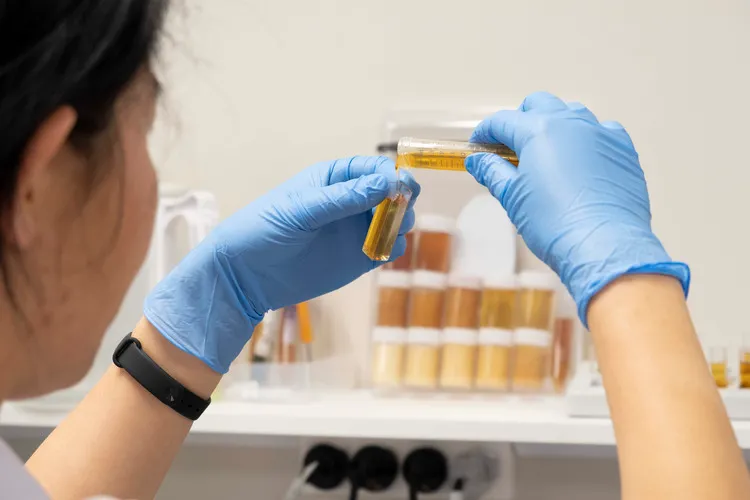
- Laboratory testing: Can the supplier provide batch-specific test results and a Certificate of Analysis?
- Authenticity: Is there supporting evidence that the honey meets applicable New Zealand Mānuka requirements?
- Consistency: Can the supplier meet the required grade and product specifications across orders?
- Traceability: Can the honey be traced through the supply chain?
These considerations are particularly important for businesses sourcing Mānuka honey in bulk or developing private label products.
Understanding Mānuka Honey Grades With Midlands Apiaries
At Midlands, Mānuka honey quality and authenticity are supported by laboratory testing, traceability and recognised quality assurance systems.
Our Mānuka honey range includes UMF-certified products, providing businesses with a recognised framework for assessing grade and quality.
For wholesale and private label buyers, understanding the differences between grading systems helps ensure product specifications align with customer expectations and intended applications.
If you are evaluating Mānuka honey for your business, our team can help you understand the available grades, testing documentation and supply options.
Find more answers
Frequently Asked Questions
Is KFactor the Same as UMF?
No. KFactor is a proprietary classification and quality assurance approach, while UMF is an independent certification and grading system. Their numbers should not be directly compared.
Can You Convert KFactor to MGO?
No reliable universal conversion exists. KFactor does not directly measure methylglyoxal concentration, so a laboratory MGO result is needed to establish that value.
What Is the Difference Between NPA and MGO?
NPA describes non-peroxide antibacterial activity, while MGO measures the concentration of methylglyoxal. Although related, they are different measurements.
Does a Higher Mānuka Honey Grade Mean Better Quality?
Not necessarily. A higher MGO rating indicates a greater concentration of methylglyoxal, but overall quality also depends on authenticity, testing, handling and other product characteristics. The appropriate grade depends on the intended application and product requirements.
Is UMF the same as MGO?
No. MGO measures methylglyoxal, while UMF is a wider quality-assurance system that assesses MGO alongside other factors, including DHA, leptosperin and HMF.
references
El-Senduny, F. F., Hegazi, N. M., Abd Elghani, G. E., & Farag, M. A. (2021). Manuka honey, a unique mono-floral honey. A comprehensive review of its bioactives, metabolism, action mechanisms, and therapeutic merits. Food Bioscience, 42, 101038. https://doi.org/10.1016/j.fbio.2021.101038



Quick Navigation
Contact our team

Steve Williams
BCom (Mgt Sc)
Seed Multiplication Sales Manager
Midlands Seed
+64 27 553 0846seed@midlands.co.nz



Nick Kerr
BCom (Hons)
Honey Sales - North America & Europe
Midlands Apiaries
+64 27 807 9849honey@midlands.co.nz
Tasman Walker
BCom (Mktg) | BSc (Psy)
Honey Sales - Asia & Australia
Midlands Apiaries
+64 27 237 6318honey@midlands.co.nz
Hamish Finnie
BSc (Food Sc. & Hum. Nutr.)
Honey Sales - Greater China Region
Midlands Apiaries
+64 27 405 1273honey@midlands.co.nz