Mānuka Honey: Medicinal Uses, Benefits and What Research Says
January 26, 2022
Share this post


TL;DR:
- Mānuka honey has demonstrated antibacterial activity in laboratory studies, but laboratory results do not automatically establish health benefits in humans.
- Honey-based wound dressings have been studied clinically, although evidence varies by wound type and product.
- Research suggests honey may help relieve some cough symptoms, but there is limited evidence that Mānuka honey works better than other varieties.
- There is no single globally agreed standard defining “medical-grade Mānuka honey”. Medical-use products must meet the requirements applicable to their intended use and market.
- Midlands supplies food-grade, UMF-certified Mānuka honey for food, wellness and cosmetic applications, not finished medical wound-care products.
Does Mānuka Honey Have Medicinal Benefits?
Mānuka honey has measurable antibacterial activity in laboratory studies, and honey-based products have been investigated for wound care, cough relief and skincare. However, these findings do not establish that eating Mānuka honey treats disease or that ordinary food-grade honey can be used for medical purposes.
The strength of the evidence depends on what was studied, how the honey was prepared and whether the research involved laboratory testing or clinical trials.
This distinction is important for consumers and businesses developing food, skincare and wellness products containing Mānuka honey.
While Mānuka honey has unique characteristics that make it a valuable ingredient, its benefits should be described accurately and supported by appropriate evidence.
This guide explains what current research suggests, which uses have clinical evidence and where further research is needed.
This article provides general information and is not medical advice.
What Makes Mānuka Honey Different From Other Honey?
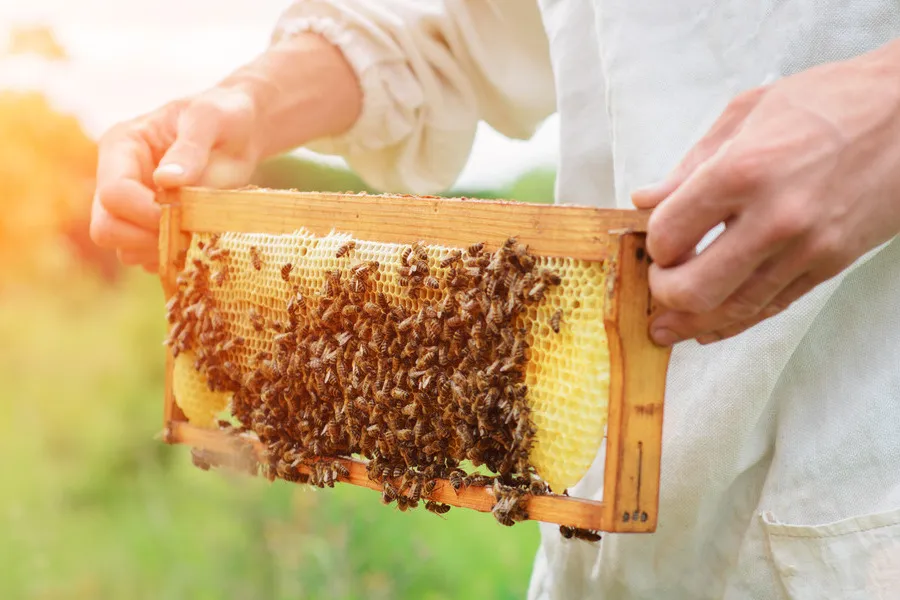
Mānuka honey is produced by bees collecting nectar from the Mānuka plant (Leptospermum scoparium), native to New Zealand.
Like other honey varieties, it contains naturally occurring sugars, water and small quantities of additional compounds.
However, Mānuka honey is particularly associated with several compounds used in research and quality assessment.
Methylglyoxal (MGO)
MGO is associated with the distinctive non-peroxide antibacterial activity observed in Mānuka honey during laboratory testing.
Concentrations vary between samples, and MGO is used as one indicator of Mānuka honey characteristics.
Dihydroxyacetone (DHA)
DHA occurs naturally in Mānuka nectar and contributes to the development of MGO as honey matures.
Leptosperin
Leptosperin is a naturally occurring compound associated with Mānuka honey and used in quality and authenticity assessment.
Together, these compounds help distinguish genuine Mānuka honey from other honey varieties.
New Zealand's Ministry for Primary Industries (MPI) has established a scientific definition for exported Mānuka honey.
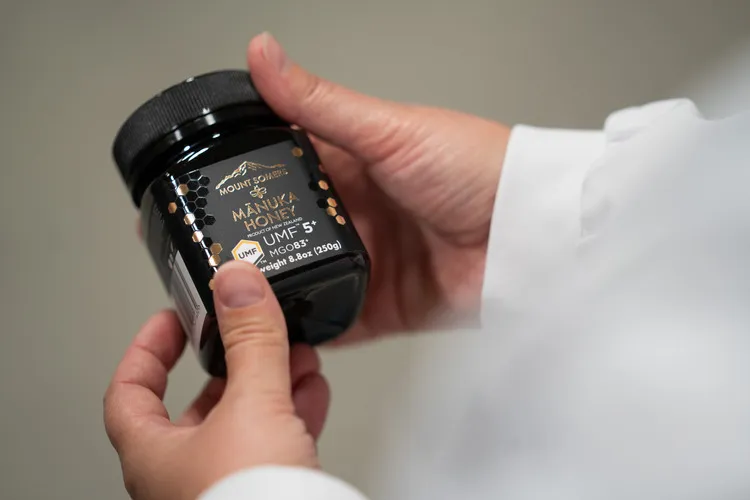
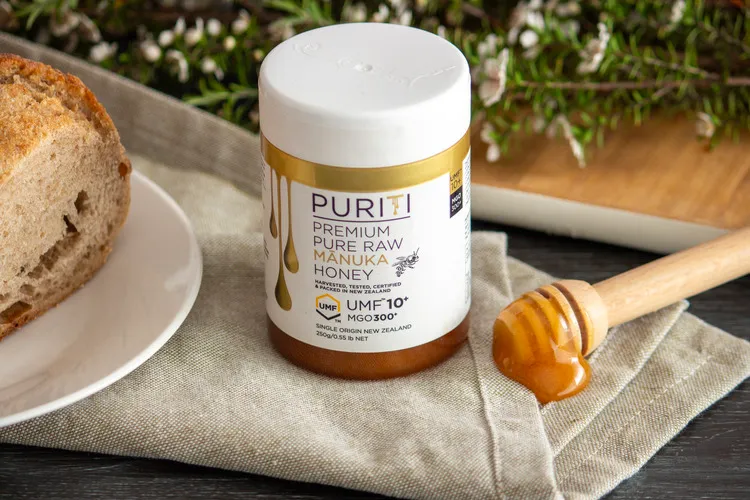
The UMF grading system separately assesses key characteristics of eligible Mānuka honey.
However, UMF and MGO grades do not measure whether a honey product is medically effective or suitable for wound treatment.
What Does Scientific Research Say About Mānuka Honey?
Research into Mānuka honey covers several different applications.
The most important distinction is between findings from controlled laboratory experiments and results demonstrated in human clinical trials.
What Do Laboratory Studies Show About Mānuka Honey?
Mānuka honey has attracted scientific interest because of its antibacterial properties.
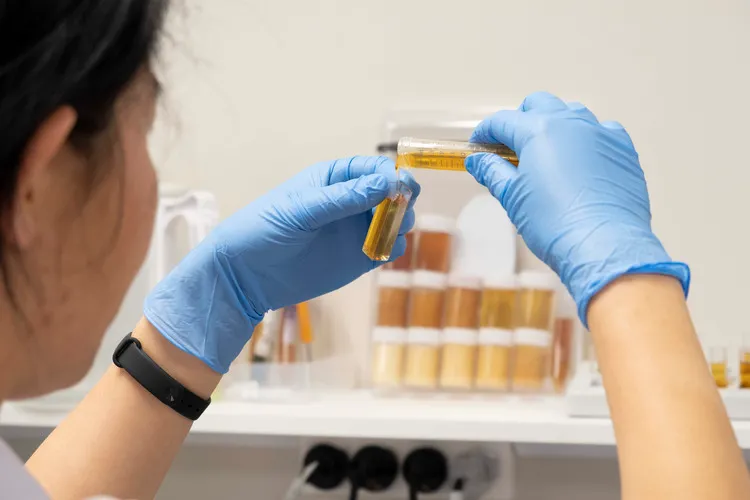
A laboratory study by Maddocks et al. (2012) investigated the effects of Mānuka honey on Streptococcus pyogenes, a bacterium associated with certain human infections.
The researchers found that Mānuka honey could inhibit bacterial biofilm development and affect established biofilms under controlled laboratory conditions.
These findings demonstrate biological activity worth investigating further.
However, laboratory experiments expose bacteria directly to measured concentrations of honey.
This is very different from consuming honey, where digestion, dilution and other biological processes influence how compounds behave.
Laboratory antibacterial activity does not prove that eating Mānuka honey can prevent or treat bacterial infections.
The same distinction applies to products containing Mānuka honey.
A lozenge, skincare formulation or food product cannot automatically claim the same antibacterial effects observed when concentrated honey is tested in a laboratory.
Finished products require their own supporting evidence.
Can Mānuka Honey Help Heal Wounds?
Honey has a long history of topical use, and modern research has investigated specially prepared honey dressings for wound management.
A Cochrane systematic review assessed clinical trials comparing honey with other topical wound treatments.
The review found evidence that honey dressings may improve healing outcomes for some wound types, including partial-thickness burns.
However, the evidence was less certain for many other wounds, including several chronic wound types.
The findings also concern honey treatments more broadly, rather than demonstrating that every Mānuka honey product has the same clinical effects.
Evidence from these studies should therefore not be interpreted as proof that ordinary Mānuka honey can heal wounds.
Why Are Medical Honey Dressings Different?
Certain honey-containing dressings are developed specifically for clinical use.
For example, the United States Food and Drug Administration has records of cleared wound dressings containing active Mānuka honey.
This clearance applies to specific medical devices and their intended uses.
It does not mean that all Mānuka honey is approved for wound treatment.
Food-grade honey should not be applied directly to open wounds as a substitute for an appropriate medical dressing or professional care.
What Is the Difference Between Food-Grade and Medical-Use Mānuka Honey?
Food-grade Mānuka honey is produced for consumption and use as an ingredient in suitable food or cosmetic products.
Products intended for wound care have different safety, manufacturing and regulatory considerations.
Importantly, there is no single globally agreed definition or universal formal standard specifically establishing what qualifies as “medical-grade Mānuka honey”.
The term is commonly used to describe honey prepared for medical applications, but its use does not replace the regulatory requirements that apply to a particular finished product.
Depending on the intended use and market, these may involve:
- Controlled ingredient sourcing and specifications
- Appropriate microbiological testing
- Validated sterilisation processes
- Controlled manufacturing conditions
- Packaging designed for the intended use
- Compliance with applicable medical-device requirements
A high UMF or MGO rating does not demonstrate that these requirements have been met.
For example, UMF 20+ honey remains food-grade honey unless the product separately meets the requirements for an intended medical application.
Regulation also varies by market.
In New Zealand, Medsafe's guidance on the WAND medical-device database explains that notification is not the same as regulatory approval.
This reinforces why buyers must assess the finished product's intended use and applicable requirements rather than rely on the phrase “medical grade”.
For a more detailed comparison, read our guide to medical-grade versus food-grade Mānuka honey.
Midlands supplies food-grade, UMF-certified Mānuka honey rather than finished medical wound-care products.
Can Mānuka Honey Help With Coughs and Sore Throats?
Honey has been investigated for its potential to relieve symptoms associated with acute coughs.
The UK's National Institute for Health and Care Excellence (NICE) includes honey as a self-care option that people over one year of age may wish to try for acute cough, while acknowledging limitations in the evidence.
A 2026 systematic review and meta-analysis by Brun et al. examined studies comparing honey with pharmaceutical treatments for acute cough in children.
The main analysis found no statistically significant difference across most outcomes, although some exploratory analyses suggested possible benefits.
The researchers also identified limitations, including differences between studies and short follow-up periods.
Importantly, these studies generally investigated honey rather than Mānuka honey specifically.
They do not demonstrate that a higher UMF or MGO grade provides better cough relief.
Honey's sweetness and texture can make it appealing in products designed for throat-soothing experiences, including lozenges.
Midlands supplies Mānuka honey lozenges for commercial customers.
However, any symptom-relief or medical claims associated with finished products must be supported by appropriate evidence and comply with destination-market regulations.
Can Mānuka Honey Benefit Skin and Skincare Products?
Mānuka honey is used in cosmetic formulations, including moisturisers, masks, balms and cleansers.
Its natural composition and laboratory-tested biological properties have encouraged research into potential skincare applications.
A small human study by Alangari et al. (2017) investigated topical Mānuka honey in people with atopic dermatitis.
The findings suggested potential benefits worth further investigation.
However, preliminary research does not establish that Mānuka honey is an effective treatment for eczema, acne or other skin conditions.
Manufacturers also need to distinguish ingredient-level laboratory findings from evidence about a complete cosmetic formulation.
A product containing Mānuka honey may behave differently depending on:
- Honey concentration
- Other ingredients
- Product stability
- Preservation systems
- Processing conditions
- Intended application
For skincare brands, Mānuka honey can offer a distinctive New Zealand ingredient story.
However, claims about treating skin conditions require suitable evidence and may fall outside the scope of ordinary cosmetic marketing.
Does Mānuka Honey Have Digestive or General Health Benefits?
Some research has explored honey's interaction with microorganisms and other biological processes relevant to digestive health.
However, much of this research remains at the laboratory or early-investigation stage.
There is insufficient clinical evidence to conclude that consuming Mānuka honey treats stomach ulcers, eliminates Helicobacter pylori, prevents infections or improves immune function.
These claims should not be made solely on the basis of laboratory antibacterial activity.
Mānuka honey can be enjoyed as part of a varied diet, but it remains a source of sugar.
The World Health Organization includes sugars naturally present in honey within its definition of free sugars and recommends limiting their consumption.
Its distinctive compounds and premium origin do not remove the need to consider overall dietary sugar intake.
Is Mānuka Honey Safe for Everyone?
Food-grade Mānuka honey can be consumed by most people over one year of age in normal food quantities.
However, several precautions are important.
Infants under 12 months
Honey should never be given to babies under 12 months because of the risk of infant botulism.
The Centers for Disease Control and Prevention (CDC) advises against giving honey to infants, including in foods and drinks.
People managing blood glucose
Mānuka honey contains significant amounts of sugar and should be accounted for when managing carbohydrate intake.
People with allergies
Individuals with known allergies to honey or relevant bee-related products should seek appropriate advice and avoid products that trigger reactions.
Wound treatment
Ordinary retail honey should not be used as a substitute for products intended for medical wound care.
Persistent symptoms
Coughs, wounds, skin problems and digestive symptoms that persist or worsen should be assessed by a qualified healthcare professional.
A high UMF grade does not remove these safety considerations.
What Should Food, Wellness and Skincare Brands Consider?
For commercial buyers, Mānuka honey offers several genuine points of difference.
These include its verified New Zealand origin, distinctive flavour, traceability and measurable quality characteristics.
However, businesses should distinguish between three types of claims:
- Ingredient facts: Contains authentic, UMF-certified New Zealand Mānuka honey.
- Product characteristics: Distinctive flavour, texture, origin or independently tested quality.
- Medical claims: Treats infections, heals wounds or prevents disease.
Medical claims require a substantially higher level of supporting evidence and may change how a product is regulated.
Manufacturers should also assess whether research on an individual ingredient applies to the finished formulation.
Midlands Apiaries supplies bulk Mānuka honey for food, wellness and suitable cosmetic applications.
Our quality assurance processes support authenticity testing, traceability and the technical documentation commercial buyers need when specifying ingredients.
We can help businesses evaluate grades, supply formats, specifications and export requirements.
Any proposed medical or health claims should be reviewed by suitably qualified scientific, clinical and regulatory specialists before publication.
Find more answers
Frequently Asked Questions
Is Mānuka honey medicinal?
Mānuka honey has biological properties investigated in scientific research. Some specially prepared honey-containing medical products have clinical applications, but this does not mean that ordinary food-grade Mānuka honey is a medicine.
Does Mānuka honey kill bacteria?
Certain Mānuka honey samples can inhibit bacteria under controlled laboratory conditions. This does not prove that eating honey eliminates infections or that finished products produce the same results.
Can I Put Mānuka Honey Directly on a Wound?
Ordinary food-grade honey should not be used as a wound dressing. Seek professional advice and use an appropriate wound-care product when indicated.
Is UMF 20+ Mānuka Honey Considered Medical Grade?
No. UMF 20+ is a honey grade, not a medical-device classification or sterility certification. There is no universally agreed medical-grade Mānuka honey standard based on UMF.
Does Mānuka Honey Help a Sore Throat?
Honey may provide temporary soothing for some people, but clinical research does not establish that Mānuka honey is more effective than other honey varieties. It should not replace appropriate treatment for diagnosed infections.
Can Mānuka Honey Be Used in Skincare Products?
Yes. Mānuka honey can be used in suitable cosmetic formulations. However, the product's safety, stability and permitted claims must be assessed, and the presence of Mānuka honey does not prove that it treats a skin condition.
references
Alangari, A. A., et al. (2017). Honey is potentially effective in the treatment of atopic dermatitis: Clinical and mechanistic studies. https://pubmed.ncbi.nlm.nih.gov/28474502/
Brun, M. T., Braga, M. C. A. V., & Grunewald, S. T. F. (2026). Honey vs. pharmacological treatment for acute cough in children: A systematic review and meta-analysis of randomized controlled trials. https://pmc.ncbi.nlm.nih.gov/articles/PMC13529870/
Centers for Disease Control and Prevention. (n.d.). Foods and drinks to avoid or limit. https://www.cdc.gov/infant-toddler-nutrition/foods-and-drinks/foods-and-drinks-to-avoid-or-limit.html
Cochrane. (2015). Honey as a topical treatment for acute and chronic wounds. https://www.cochrane.org/evidence/CD005083_honey-topical-treatment-acute-and-chronic-wounds
Maddocks, S. E., Lopez, M. S., Rowlands, R. S., & Cooper, R. A. (2012). Manuka honey inhibits the development of Streptococcus pyogenes biofilms and causes reduced expression of two fibronectin binding proteins. https://pubmed.ncbi.nlm.nih.gov/22294681/
Medsafe. (2011). Explanation of the WAND database. https://www.medsafe.govt.nz/regulatory/devicesnew/3-2Explanation.asp
Ministry for Primary Industries. (n.d.). Ensuring Mānuka honey is authentic. https://www.mpi.govt.nz/food-business/honey-bee-products-processing-requirements/manuka-honey-testing
National Institute for Health and Care Excellence. (2019). Cough (acute): Antimicrobial prescribing — recommendations. https://www.nice.org.uk/guidance/ng120/chapter/Recommendations
U.S. Food and Drug Administration. (2011). MEDIHONEY gel dressing with active Manuka honey (510(k) K101793). https://www.accessdata.fda.gov/scripts/cdrh/cfdocs/cfpmn/pmn.cfm?id=K101793
World Health Organization. (2026). Healthy diet. https://www.who.int/news-room/fact-sheets/detail/healthy-diet



Quick Navigation
Contact our team

Steve Williams
BCom (Mgt Sc)
Seed Multiplication Sales Manager
Midlands Seed
+64 27 553 0846seed@midlands.co.nz



Nick Kerr
BCom (Hons)
Honey Sales - North America & Europe
Midlands Apiaries
+64 27 807 9849honey@midlands.co.nz
Tasman Walker
BCom (Mktg) | BSc (Psy)
Honey Sales - Asia & Australia
Midlands Apiaries
+64 27 237 6318honey@midlands.co.nz
Hamish Finnie
BSc (Food Sc. & Hum. Nutr.)
Honey Sales - Greater China Region
Midlands Apiaries
+64 27 405 1273honey@midlands.co.nz