
Quality, Food Safety & Certifications
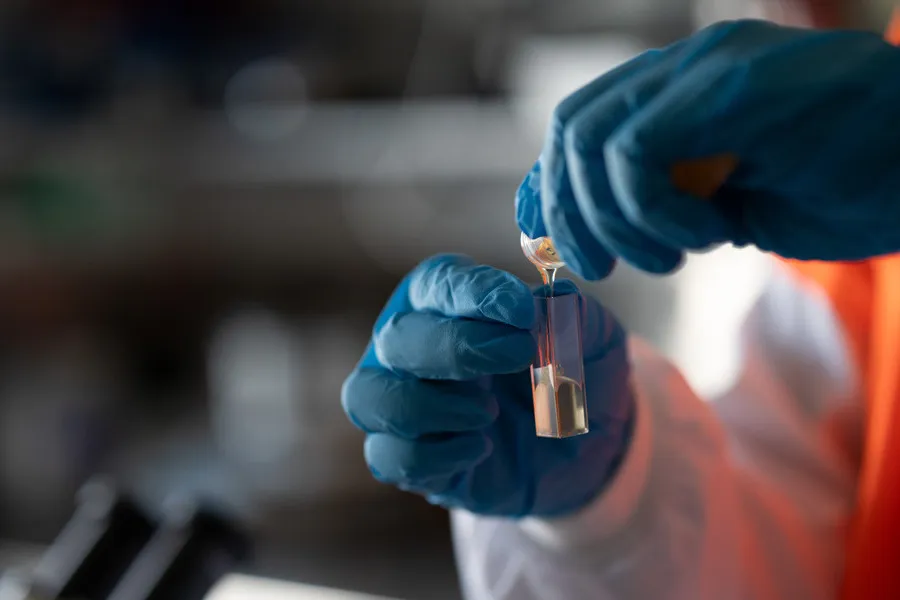
Our honey is inspected at every stage of production, from harvest through to a final metal detection check before it's packed. Our in-house laboratory tests every batch, and internationally accredited independent laboratories verify the results. Each order comes with a certificate of analysis checked against both our specifications and yours. If you have particular requirements, we can tailor the specifications to suit. This page lists every certification, registration and audit behind our honey, so you can check us against your supplier approval requirements.
Certifications at a Glance
Our certifications are renewed through regular independent audits, so we don't publish expiry dates here. If you need current certificates for supplier approval, ask our team and we'll send them through.
Certifications are maintained through regular independent audits. Copies of current certificates are available on request.
Food Safety & Quality Systems
Our honey is processed and packed in our own facility in New Zealand. It's audited every year against international food safety standards and the New Zealand regulations that apply to honey processing.
SQF (Safe Quality Food)
Covers: Our processing facility
SQF is one of the world's most widely recognised food safety and quality certifications. It's built on HACCP principles and covers hazard control, supplier approval, traceability, corrective actions and staff training. It looks at product quality as well as food safety, so problems are prevented rather than caught after the fact.
Our facility is independently re-audited every year. We've scored 99% in every SQF audit since 2022, which puts us in SQF's top "Excellent" rating band. About SQF.
HACCP
Covers: Our proccessing facility
Hazard Analysis and Critical Control Point (HACCP) is an internationally recognised system. It identifies the food safety hazards at each step of production and sets the controls that manage them. Our HACCP programme is audited every year alongside SQF.
GMP (Good Manufacturing Practise)
Covers: Our processing facility
GMP covers the day-to-day practices a HACCP programme relies on, including hygiene, equipment, premises and handling. Ours have been independently verified, and they're audited every year alongside SQF.
MPI Risk Management Programme (RMP)
Covers: Our processing facility
New Zealand law requires every business that processes animal products, including honey, to run a registered Risk Management Programme. Ours is registered with the Ministry for Primary Industries (MPI). It identifies the hazards and risk factors in our production and sets out how we control them, so the honey is safe and fit for its intended purpose. It's audited every year, with quarterly load-out audits. About RMPs.
Allergen Management
Covers: our processing facility
Our allergen management programme is part of our Quality Assurance Manual and prerequisite programme. The only allergen handled on site is bee-collected pollen, which goes into some of our products. Controls include staff training, verified allergen cleans, and records of allergen use and clean-downs. The Technical Manager audits the programme at least once a year.
NZFSSRC Membership
Covers: Midlands as a company
We're members of the New Zealand Food Safety Science & Research Centre. The centre brings together industry, government and researchers to improve food safety in New Zealand. Membership is renewed annually.
Note: We also complete customer-specific audits and retailer requirements as part of supplier approval.
Market Registrations
Some markets require exporters to be registered before honey can clear the border. We hold the registrations for our key export markets. Our in-house export and logistics team then manages the compliance side of every shipment:
- Export documentation: We prepare and check all the paperwork each shipment needs, which reduces the risk of delays or compliance problems at the destination.
- Market-specific compliance: Import rules differ from country to country. We work through them so your honey arrives compliant and ready to sell.
From freight booking to delivery timing, our team handles the whole export process.
Where we Export
We currently supply customers in the markets below, and we're always open to new ones. If your market isn't listed, talk to our team about what's needed.
- Asia: Brunei, China, Hong Kong, India, Indonesia, Japan, Malaysia, Philippines, Singapore, South Korea, Thailand, Taiwan
- North & South America: United States, Canada, Mexico
- Europe & UK: Czech Republic, Denmark, France, Germany, Italy, Netherlands, Poland, Switzerland, United Kingdom
- Middle East: Bahrain, Israel, Qatar, Saudi Arabia, United Arab Emirates
- Oceania: Australia, New Zealand
FDA Registration (United States)
Covers: our processing facility
Our facility is registered with the US Food and Drug Administration, which is required to export food to the United States.
GACC Registration (China)
Covers: our processing facility
We're registered with the General Administration of Customs of China, which is required to export food to China.
MFDS Registration (South Korea)
Covers: our processing facility
We're registered with South Korea's Ministry of Food and Drug Safety, which is required to export food to South Korea.
Secure Exports Scheme (SES)
Covers: Midlands as a company
SES is New Zealand Customs' Authorised Economic Operator programme, and it meets World Customs Organization supply chain security standards. Our shipments are secured from packing through to export. That means fewer Customs delays, priority recovery if trade is disrupted, and less impact when security levels change. SES is recognised by Australia, Canada, China, Hong Kong, Japan, South Korea, Singapore, Taiwan and the United States. About SES.
United States Compliance
Covers: individual products
Our monofloral and multifloral Mānuka honey has been evaluated against California Proposition 65, and we can supply a Prop 65 statement for supplier approval. A GRAS statement is also available.
European Union Compliance
Covers: individual products
Our honey complies with the EU food regulations that apply to it: General Food Law (EC 178/2002), Food Hygiene (EC 852/2004) and Food Information to Consumers (EU 1169/2011). Honey for the EU must be shipped directly from New Zealand, either by airfreight or full container, because part-container shipments that stop at other ports can be rejected at EU customs. We'll work out the most cost-effective shipping method when we prepare your pricing.
Mānuka Authenticity & UMF™
All Mānuka honey we sell is tested against the New Zealand Government's definition of Mānuka honey. Testing is done by internationally accredited independent laboratories, not just our own lab.
MPI Mānuka Honey Definition
Covers: individual products
MPI's scientific definition checks for four chemical markers and Mānuka pollen DNA. Honey has to pass all five tests before it can be sold as monofloral Mānuka. Every batch is independently tested.
UMFHA Licence
Covers: Midlands as a company
We're licensed by the UMF Honey Association to grade and market Mānuka honey under the UMF™ quality mark. Licence #2888.
UMF™ Certification
Covers: individual products
UMF™ is the most complete grading system for Mānuka honey. The grade is based mainly on methylglyoxal (MGO), with leptosperin as another key marker. DHA and HMF are also tested, which shows the honey's freshness and how it has been handled. To qualify, the honey must be monofloral and both sourced and packed in New Zealand. UMF™ certificates are issued for individual products.
Truth-in-labelling Testing
Covers: individual products
Every year we test random samples at the end of their shelf life to check the grade still matches the label.
Naturally produced
Covers: individual products
All the honey we supply is 100% naturally produced. We never add dihydroxyacetone (DHA) or methylglyoxal (MGO), the compounds used to grade Mānuka honey.
Note: See how we test in our laboratory, or read about the different Mānuka honey certification methods.
Dietary & Religious Suitability
Halal
Covers: individual products
Halal means permissible under Islamic law. Certified products have to come from an acceptable source and be prepared according to those laws. Our products are certified Halal by FIANZ and NZIDT, and our honey is pork free. About FIANZ.
Kosher
Covers: individual products
Our products are certified Kosher by Kosher Kiwi. The certification follows inspection by the Orthodox Rabbinate of New Zealand, and our whole plant is under Rabbinical supervision. Our honey is Kosher and Parve, including for Passover, in both liquid and creamed forms. Selected products for the United States also carry Orthodox Union (OU) certification.
Gluten Free, Vegetarian and WADA
Covers: individual products
Mānuka honey is naturally gluten free. Our honey is suitable for vegetarians but not vegans, because it's an animal product. A WADA statement is available for sports nutrition customers.
Purity & Free From
All of our honey is 100% New Zealand honey, with nothing added. Our testing programme and the way we run our facility back up the claims below.
Glyphosate Residue Free
Covers: individual products
Our honey is certified Glyphosate Residue Free. It's tested by an independent ISO 17025 accredited laboratory. About the certification → detoxproject.org
What we test for
- Pesticides: Pesticide multiresidue analysis every year.
- Veterinary drugs and antibotics: Residue testing every year, covering amphenicols, nitrofuran metabolites, nitroimidazoles, dapsone, sulfonamides, streptomycin, tetracyclines, fluoroquinolones and macrolides.
- Monofloral status: Pollen tested against the standard for the stated floral source, along with colour, conductivity and sugar spectrum.
- Adulteration: Our honey is never diluted with sugar or syrup, and adulteration screening is part of our testing programme.
- Contaminants: Heavy metals, aflatoxins, mycotoxins and pyrrolizidine alkaloids.
Free From
- Non-GMO: It's 100% New Zealand origin. No fresh produce in New Zealand is genetically modified, and no GM crops are grown commercially.
- No additives: No preservatives, artificial colours, flavours or sweeteners, MSG, modified food starch or methyl-N-methylanthranilate.
- Phthalate free: There are no additives or phthalates in our honey.
- Antibiotic free: Antibiotic use in bees is heavily restricted in New Zealand, so there's no possibility of traces in our honey.
- Irradiation free: It isn't irradiated and contains no irradiated ingredients.
- Nanoparticle free: No nanoparticles are used anywhere in our facilities.
- Residual solvent free: No solvents are used in manufacture, formulation or packaging.
Sustainability & Ethical Trade
Toitū Net Carbon Zero Organisation
Covers: Midlands as a company
Toitū Envirocare is New Zealand's leading carbon certification body. Its certification follows ISO 14064-1 and the GHG Protocol. To be certified, we have:
- measured our greenhouse gas emissions across beekeeping, processing, packaging and export freight
- committed to a verified plan to keep reducing them
- offset the rest with certified carbon credits that fund environmental restoration
We're audited every year, on a three-year certification cycle. Brands we supply can state in words that their honey comes from a Toitū Net Carbon Zero certified organisation. What this means for your brand
Sedex SMETA
Covers: Midlands as a company
Sedex is one of the world's leading ethical trade membership organisations. Our SMETA audit covers labour standards, health and safety, the environment and business ethics. We also have a zero-tolerance policy on child labour.
Bee welfare
Covers: Midlands as a company
Our beekeeping follows the New Zealand Honeybee Care Code, and we can supply our bee welfare statement on request.
New Zealand Origin Marks
FernMark
Covers: our brands
FernMark is the New Zealand Government's licence mark for genuine New Zealand products. Our honey is harvested, packed, certified and tested in New Zealand, so our brands are eligible to carry it. About FernMark.
NZ Made / NZ Grown
Covers: our brands
This mark confirms our products are made and grown in New Zealand. About NZ Made.
How Our Certifications Fit Together
Buyers often ask how MPI, our RMP, SQF and UMF™ relate to each other. Each one covers a different layer, starting with the legal minimum and ending with the honey in the jar.
- The law: MPI. The Ministry for Primary Industries is New Zealand's food safety and export regulator. It sets the rules every honey processor has to follow, including the official Mānuka honey definition and export certification.
- How we meet the law: RMP. Our Risk Management Programme is the legally required food safety programme that puts MPI's rules into practice at our facility. It's registered with MPI and audited every year.
- Going beyond the law: SQF. SQF is voluntary. We hold it because it shows our food safety and quality systems meet an international standard that retailers and brand owners recognise.
- The product itself: UMF™. The first three cover how and where the honey is made. UMF™ certifies the Mānuka honey itself, confirming it's genuine and verifying its grade.
In short: MPI sets the rules. Our RMP is how we meet them legally. SQF shows we go beyond what the law requires. UMF™ certifies the Mānuka honey itself.
Need certificates for supplier approval?
Our Technical Manager and sales team can send current certificates, specifications and certificates of analysis for your order.
Quick Navigation
Contact our team

Tasman Walker
BCom (Mktg) | BSc (Psy)
Honey Sales - Asia & Australia
Job Title 2
+64 27 237 6318honey@midlands.co.nz
Nick Kerr
BCom (Hons)
Honey Sales - North America & Europe
Job Title 2
+64 27 807 9849honey@midlands.co.nz
Hamish Finnie
BSc (Food Sc. & Hum. Nutr.)
Honey Sales - Greater China Region
Job Title 2
+64 27 405 1273honey@midlands.co.nz