Medical-Grade vs Food-Grade Mānuka Honey: What's the Difference?
October 8, 2026
Share this post


- A high UMF or MGO rating does not make Mānuka honey medical grade, because UMF measures honey quality rather than medical-device status.
- Medical-grade honey used in wound care depends on its intended medical use, validated sterilisation, manufacturing controls and medical-device regulation.
- Food-grade Mānuka honey is made for eating and for food or cosmetic formulations, so it should never be treated as a substitute for regulated wound-care products.
This article is general information and is not medical advice.
Quick answer:
Many buyers assume that the higher the UMF or MGO grade, the closer a Mānuka honey product is to being medical grade. It’s a reasonable assumption to make. If Mānuka honey carries a UMF 20+ or MGO 829+ rating, surely it’s strong enough to go into a medical product? It’s one of the most common misconceptions we hear from buyers, and getting it wrong can affect everything from product development to the claims on your label.
In reality, grade and medical suitability are measured in completely different ways. UMF and MGO tell you about a honey’s authenticity, potency and quality. They don’t tell you whether it’s sterile, how it was manufactured or whether it meets the regulations that apply to medical devices. A high UMF or MGO rating alone does not make ordinary Mānuka honey medical grade.
This guide compares medical-grade Mānuka honey vs food-grade honey across intended use, manufacturing, sterilisation and regulation. It explains what is medical-grade Mānuka honey, so you can specify the right ingredients in your product with confidence.
The table below shows how the two compare at a glance, from intended use through to packaging and wound use.
Midlands Apiaries supplies UMF-certified, food-grade Mānuka honey for food, wellness and cosmetic applications in bulk, private label and retail-ready formats.
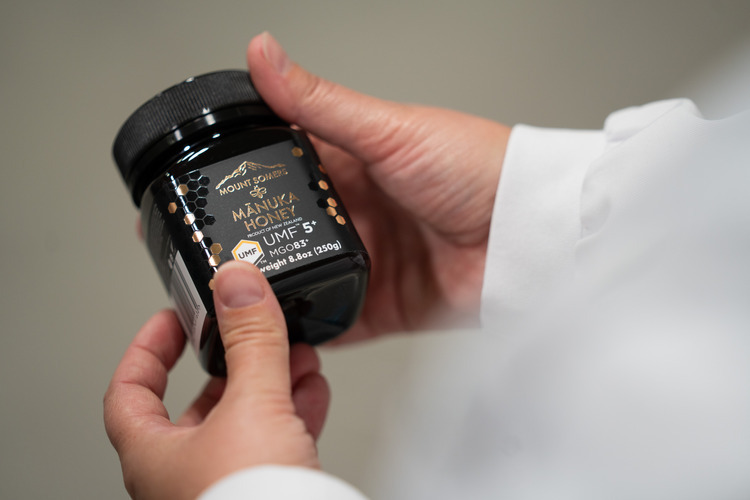
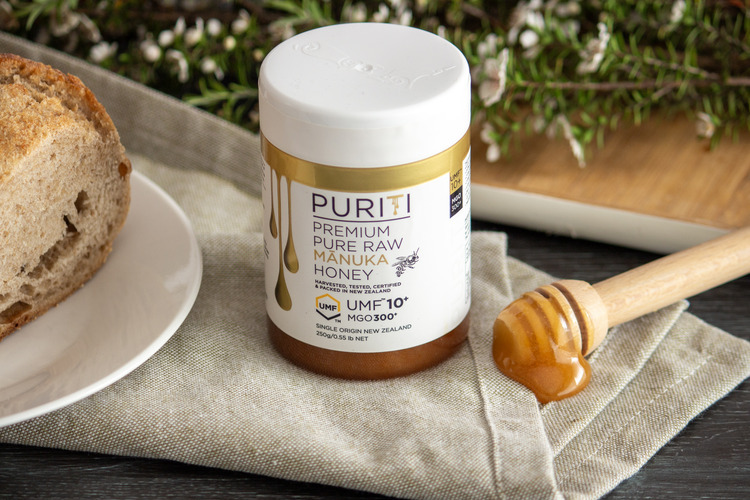
We don’t supply finished medical-grade wound-care products. Nor do we market our honey, or our PURITI, Mount Somers and Primal by Nature brands, as medical grade.
The Main Difference Between Medical-Grade and Food-Grade Mānuka Honey?
The difference between medical and food-grade Mānuka honey comes down to purpose and manufacturing control. Food-grade Mānuka honey is produced as food. Medical-grade honey is prepared for defined clinical uses under additional safety, processing, packaging and regulatory requirements. The UMF or MGO number alone does not decide whether a honey is medical grade.
Two honey products can both be genuine Mānuka, but still end up in completely different categories. What separates them is every step of the process that the product follows, from the sourcing right through to its sale.
This includes:
- How the honey is sourced, and the raw-material specification it must meet
- How it is manufactured, and the quality controls applied along the way
- Whether it goes through validated sterilisation
- How it is packaged to protect its quality or sterility
- What it is intended to be used for
- Which regulatory requirements apply in each market where it is sold
In other words, a Mānuka honey’s medical-grade status is built into every stage of a product’s journey, not simply decided at the end of the product’s manufacturing.
What Makes Mānuka Honey “Medical Grade”?
So then, what is medical-grade Mānuka honey?
It would be inaccurate to call medical-grade Mānuka a ‘particularly strong jar’ of honey. Medical-grade honey is produced and processed to requirements appropriate to medical use. Published clinical guidance commonly names five key distinctions:
- Controlled sourcing
- Microbiological safety
- Sterilisation
- Standardised production
- Compliance with medical-device requirements.
An evidence summary in Wound Practice and Research describes medical-grade honey as honey that has been sterilised by gamma radiation, carries an indicator of its antibacterial activity, is registered for medical purposes and meets all national labelling requirements.
Researchers working to define the standards for medical grade honey have proposed a formal criteria. In 2025, a paper in the Journal of Wound Care refined those criteria, noting the extra demands of the European Union’s Medical Device Regulation.
In practice, medical-grade Mānuka honey products are typically distinguished by the following:
- a defined intended medical use
- a controlled source and specification for the honey
- microbiological quality suited to medical use
- validated sterilisation
- manufacturing quality controls
- controlled packaging
- product-specific clinical and regulatory evidence
Now, it’s also important to note that everyday honey can naturally contain microbial spores, even when it’s perfectly acceptable as food. Medical-grade wound-care honey will therefore use a validated sterilisation process. This process is designed to reduce the microbiological risk, without damaging the honey’s properties.
Why does it matter? Wound-care products are used where the skin is already damaged. That means that everything interacting with the skin needs to be sterile, rather than simply ‘clean’ or ‘safe to eat’. Food safety testing can’t close the gap on its own - it only checks to ensure that the microbial levels fall within the limits that are acceptable for food. Honey sterility is only achieved through its own validated process.
Medical honey sterilisation has been studied for decades. One frequently cited study, published in 1995, examined gamma sterilisation of honey that had been deliberately spiked with bacterial spores. The process has to be validated and tightly controlled within finished-product manufacturing.
Then in 2021, a study in Wounds Asia found that lower doses of gamma irradiation did not sterilise raw honey samples, while a higher dose did. As a result, standards for medical-grade honey require gamma sterilisation as a core requirement.
That is why sterilised Mānuka honey for medical use reaches the market as a packaged, regulated product, rather than as a standard retail jar. Food-grade Mānuka honey, by contrast, is not inherently sterile, and it doesn’t need to be. It’s made under food safety systems designed for something you eat.
Does a High UMF Rating Make Mānuka Honey Medical Grade?
No. UMF measures have defined the quality factors within New Zealand Mānuka honey; it does not certify a jar as a sterile medical device.
A UMF 20+, 25+ or 31+ food product remains a food product. That only changes if it has separately met the manufacturing, regulatory and product requirements for its intended medical use. The UMF grading system, administered by the UMF Honey Association, assesses four markers:
- methylglyoxal (MGO)
- leptosperin
- dihydroxyacetone (DHA)
- hydroxymethylfurfural (HMF)
Together, these speak to a honey’s authenticity and potency. Our guide, What Does UMF Mean?, explains each one.
None of those markers measure sterility, device classification or the product’s suitability for wound care. That’s why “UMF medical-grade honey” isn’t a recognised product category. A premium UMF 25+ jar is an exceptional food-grade Mānuka honey, but at the end of the day, it’s still just a food.
When it comes to ‘UMF-certified honey’ and ‘medical-grade honey’, the two categories can overlap - but they’re not equivalent.
- UMF certification concerns Mānuka identity, quality and grade.
- Medical-grade status concerns suitability and regulatory controls for a medical application.
A medical product might utilise well-characterised Mānuka honey, but UMF certification alone does not authorise wound-care claims. For example - a Mānuka honey wound dressing, sold as a regulated device, might well contain carefully specified Mānuka honey. Its medical status comes from the device’s own controls, sterilisation, testing and regulatory obligations. Not from the honey’s grading certificate.
As a result of this, you should never assume that food-grade Mānuka honey is appropriate for wound treatment. Clinical guidance separates regulated, sterilised medical honey from consumer honey, because products intended for wounds need additional microbiological and manufacturing controls.
“Can you put Mānuka honey on wounds?” is a common question we hear asked, and it’s an understandable one. But this is exactly where the medical honey vs regular honey distinction matters most. Published guidance on medical-grade honey wound care refers to sterilised, registered products.
Anything that’s sold as wound care Mānuka honey must meet requirements that a jar of food-grade honey was never designed to meet. If you, or someone you care for has a wound that needs attention, please speak with a doctor, nurse or pharmacist. Use any product according to its authorised instructions.
How Does Medical-Grade Honey Regulation Work?
The requirements largely depend on where the product is sold - so this is best understood at a higher level.
In New Zealand, Medsafe oversees medical devices. Its medical device guidance states that, unless exempt, all medical devices supplied in New Zealand must be notified to the WAND (Web Assisted Notification of Devices) database. Medsafe also notes that devices approved in Australia must still be notified here, because the two countries’ requirements differ.
Let’s explain what that means. ‘WAND notification’ is not regulatory approval. Medsafe states that notifying a device to the database does not always mean it’s been assessed for quality, safety or performance. WAND is a record of which devices are being supplied, and by whom, so that Medsafe can act quickly if a safety issue arises.
For buyers, the practical takeaway is simple: a honey product appearing on ‘WAND’ has been notified, not approved. Responsibility for the product’s safety and compliance remains with the manufacturer and the New Zealand sponsor.
Meanwhile, the European Union operates under its Medical Device Regulation, and the United States, United Kingdom and Australia each have their own frameworks. A few principles hold across markets:
- The regulation varies by destination, so requirements need to be confirmed for each market.
- “Medical grade” should not be treated as an informal marketing adjective.
- Manufacturers must establish the intended use, classification and requirements for any Mānuka honey medical device.
- Requirements in New Zealand, Australia, the EU, the UK and the US differ, and they can change over time.
In the end, the difference between medical and food-grade Mānuka honey is as much regulatory as it is technical.
Does Midlands Apiaries Supply Medical-Grade Mānuka Honey?
No. As outlined above, Midlands supplies food-grade Mānuka honey rather than finished medical-grade products. What we offer is traceable, well-documented supply, backed by the technical detail commercial buyers need when specifying, approving and importing an ingredient.
Because Midlands is vertically integrated, we manage the process from hive to export rather than relying on a chain of third parties:
Beekeeping: our dedicated beekeeping company, Midlands Bees, manages hive health and honey collection.
Processing and packing: our purpose-built Ashburton facility operates a HACCP-based Risk Management Programme. The facility is also licensed and inspected by the Ministry for Primary Industries.
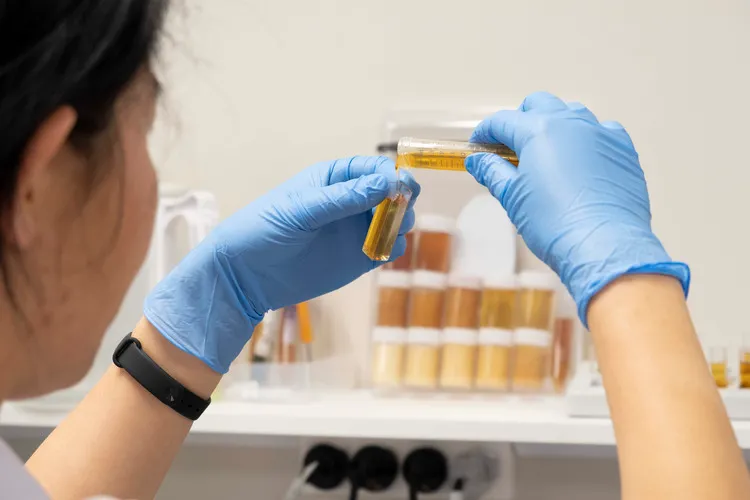
Testing: our in-house laboratory tests honey at each production stage, and independent IANZ-accredited laboratories verify the results. Every jar of monofloral Mānuka honey we seal must first pass screening for authenticity, potency, shelf life and freshness.
Export: our in-house Export and Logistics team prepares and verifies export paperwork for each destination market.
Our quality assurance team, led by Technical Manager Beth Mitchell, oversees compliance across every one of these stages.
These are the kinds of documents that our commercial buyers can request:
- Certificate of Analysis - The test results for your honey, confirming that the honey you’ve received matches the specific UMF rating it claims to possess.
- Product specification - UMF or MGO grades and other agreed parameters, which can be tailored to your requirements
- UMF certification - An independent verification of your Mānuka honey product’s identity and grade
- Authenticity testing - The monofloral status of your product confirmed through pollen, colour, conductivity and sugar profile testing
- Residue testing - Including glyphosate residue testing by an independent, accredited laboratory
- Export documentation - FDA and GACC registrations, Secure Exports Scheme membership paperwork
Are you looking to develop a food, wellness or cosmetic product? Talk to our team about specifications, samples and Certificates of Analysis.
Knowing how to discern medical-grade Mānuka honey from regular honey protects consumers, and helps brands make claims they can stand behind. The difference between medical and food-grade Mānuka honey isn’t decided by the number on the label. It comes down to intended use, sterilisation, manufacturing controls and regulation.
High-grade Mānuka honey is a wonderful food, and a medical-grade honey product is a regulated device. Both have their place, but neither should be mistaken for the other.
Find more answers
Frequently Asked Questions
What UMF is considered medical grade?
No UMF rating automatically makes honey medical grade. Medical-grade status depends on the finished product’s intended use, sterilisation, manufacturing controls and device regulation.
Is UMF 20+ medical-grade Mānuka honey?
No. UMF 20+ is a high grade of food product. It only becomes part of a medical product if it is separately manufactured, sterilised and regulated for that use.
Is food-grade honey sterile?
No. Food-grade honey is not required to be sterile, so it should not be assumed suitable for wound care.
Can regular Mānuka honey be used on wounds?
Food-grade Mānuka honey should not be treated as a substitute for regulated medical-grade wound-care products. Always seek professional advice for wound treatment.
Can Mānuka honey be used in both food and skincare products?
Yes. Food-grade Mānuka honey can be an ingredient in food and cosmetic formulations where the relevant requirements are met. Cosmetic use does not make it medical grade.
references



Quick Navigation
Contact our team

Steve Williams
BCom (Mgt Sc)
Seed Multiplication Sales Manager
Midlands Seed
+64 27 553 0846seed@midlands.co.nz



Tasman Walker
BCom (Mktg) | BSc (Psy)
Honey Sales - Asia & Australia
Midlands Apiaries
+64 27 237 6318honey@midlands.co.nz
Nick Kerr
BCom (Hons)
Honey Sales - North America & Europe
Midlands Apiaries
+64 27 807 9849honey@midlands.co.nz
Hamish Finnie
BSc (Food Sc. & Hum. Nutr.)
Honey Sales - Greater China Region
Midlands Apiaries
+64 27 405 1273honey@midlands.co.nz