Mānuka Honey vs Sugar: Nutrition, Calories and Product Formulation
January 26, 2023
Share this post


TL;DR:
- Mānuka honey contains mainly fructose and glucose, while refined table sugar is almost entirely sucrose.
- Honey contains fewer calories per 100 g, but a teaspoon of honey can provide more calories than a teaspoon of sugar because it weighs more.
- Mānuka honey contains naturally occurring compounds, but it remains high in sugar and should not be considered automatically healthier than refined sugar.
- For food manufacturers, Mānuka honey offers distinctive flavour, New Zealand origin and premium positioning, but requires careful formulation.
Is Mānuka Honey Better Than Refined Sugar?
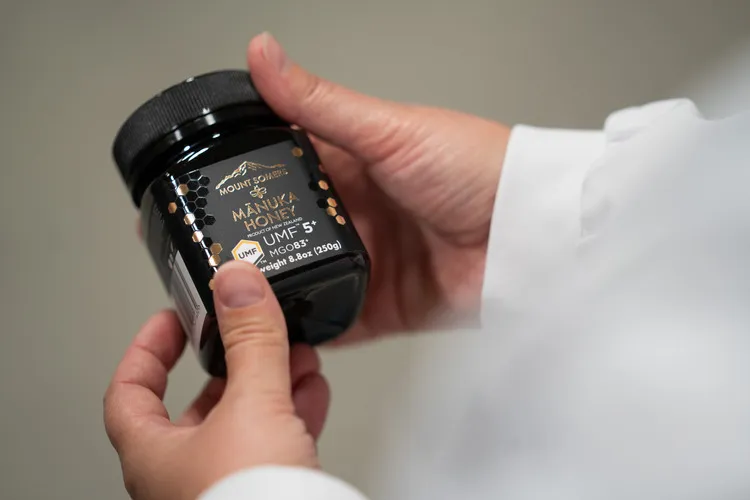
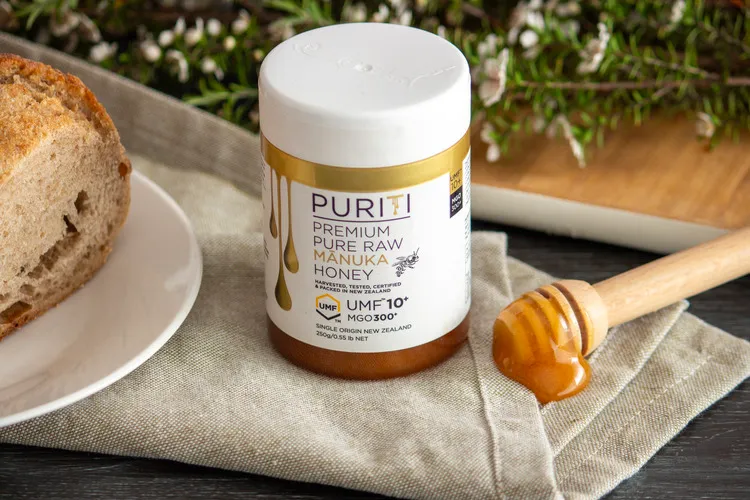
Mānuka honey is a natural sweetener with a different composition and flavour from refined sugar, but it is still high in sugar. It contains mainly fructose and glucose, water and small amounts of other naturally occurring compounds. Refined table sugar is almost entirely sucrose. Neither should be treated as a health food simply because of its source.
For food manufacturers and private-label brands, the more useful question is whether Mānuka honey is the right ingredient for a particular product.
Its distinctive flavour, moisture content, consistency and New Zealand origin can make it attractive for premium food and beverage formulations. However, replacing refined sugar with honey does not automatically reduce a product's sugar content or make it suitable for people managing blood glucose.
This guide compares Mānuka honey and refined sugar across nutrition, calories, glycaemic response, taste and product formulation.
What Is the Difference Between Mānuka Honey and Refined Sugar?
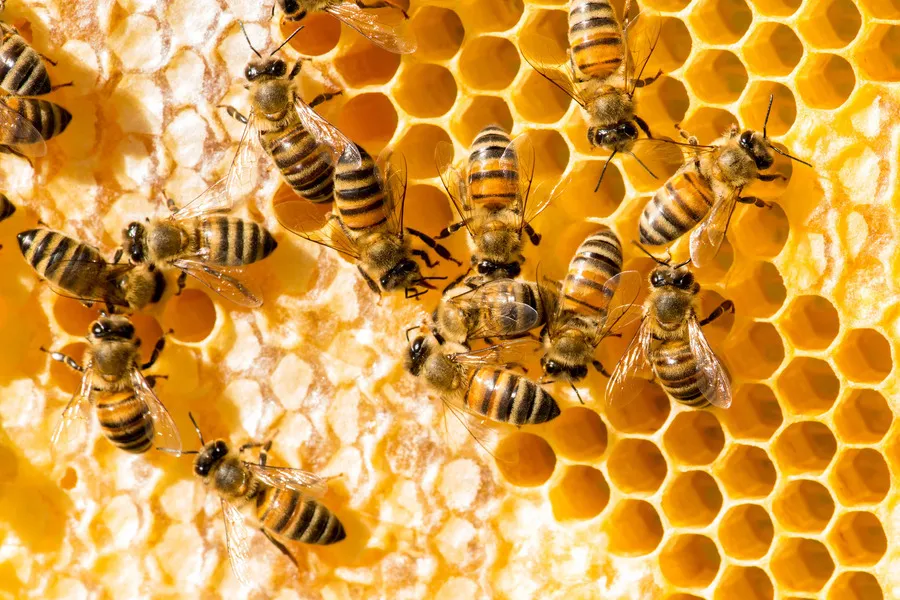
Mānuka honey is produced by bees collecting nectar from the Mānuka plant (Leptospermum scoparium), which grows in New Zealand.
Honey's main sugars are fructose and glucose. It also contains water, organic acids and trace compounds that contribute to its flavour, colour and other characteristics.
Mānuka honey is particularly associated with methylglyoxal (MGO), a compound used to evaluate its distinctive antibacterial activity in laboratory settings. However, the presence of MGO does not change the fact that honey contains substantial amounts of sugar.
New Zealand's Ministry for Primary Industries (MPI) has established a science-based definition for exported Mānuka honey, helping buyers distinguish authentic monofloral and multifloral products.
Refined table sugar, commonly produced from sugar cane or sugar beet, is primarily sucrose. Sucrose is made from glucose and fructose bonded together.
Its clean sweetness, consistent composition, dry form and relatively low cost make refined sugar useful across a wide range of food products.
Both ingredients provide energy. Their differences become more important when considering serving sizes, flavour and how they behave in a finished product.
Mānuka Honey vs Sugar: Calories and Nutritional Comparison
The following figures are typical values for honey and granulated sugar, based on USDA FoodData Central.
These are general reference values rather than a nutritional specification for a particular Mānuka honey batch.
Honey generally contains fewer calories per 100 g because it contains water.
However, this does not mean that eating honey instead of sugar will necessarily reduce calorie intake.
Honey is denser than granulated sugar, so equal spoonfuls have different weights. Its flavour may also influence how much is used in a recipe.
Although honey contains small quantities of naturally occurring compounds, these are not present in amounts that make it a meaningful source of essential vitamins or minerals at normal serving sizes.
For consumers and manufacturers, the quantity consumed remains important.
Does Mānuka Honey Have Fewer Calories Per Teaspoon?
Not necessarily.
A level teaspoon of granulated sugar weighs approximately 4 g and provides around 16 calories.
A teaspoon of honey weighs approximately 7 g and provides around 21 calories.
These figures are estimates because spoon sizes and filling methods vary.
This illustrates why comparing ingredients by weight and serving size can produce different results.
Per 100 g, honey generally contains fewer calories. Per teaspoon, honey can contain more calories because it weighs more.
For food manufacturers, nutritional calculations should be based on the actual quantity of each ingredient in the finished product.
If Mānuka honey provides enough flavour and sweetness to allow a reduction in the total sweetener used, this may be useful. However, that outcome needs to be demonstrated through formulation trials rather than assumed.
Does Mānuka Honey Have a Lower Glycaemic Index Than Sugar?
The glycaemic index (GI) measures how carbohydrate-containing foods affect blood glucose under standardised testing conditions.
Research into honey and glycaemic response has produced mixed results.
A study by Chepulis and Francis (2012) investigated the glycaemic index of five Mānuka honey samples in healthy volunteers.
The research demonstrated that glycaemic responses can vary between honey samples. However, this was a small study and does not establish that all Mānuka honey has a lower GI than refined sugar.
A broader systematic review and meta-analysis by Ahmed et al. (2023) examined the effects of honey on cardiometabolic risk factors.
The researchers identified some favourable changes in certain metabolic markers, but much of the evidence was considered low certainty.
The review does not demonstrate that Mānuka honey is a suitable sugar replacement for everyone or that consuming more honey will improve health.
The important distinction is that Mānuka honey still contains substantial amounts of sugar and raises blood glucose.
Manufacturers should also avoid making glycaemic or disease-related claims without suitable product-specific evidence and regulatory review.
Is Mānuka Honey Healthier Than White Sugar?
Mānuka honey has a different chemical composition from refined sugar and contains additional naturally occurring compounds.
However, these differences do not automatically make it a healthier choice.
The World Health Organization (WHO) includes sugars naturally present in honey within its definition of free sugars.
WHO recommends limiting free sugars to less than 10% of total daily energy intake, with a further reduction to 5% or less potentially providing additional health benefits.
This recommendation applies regardless of whether the sugar comes from honey, refined sugar or other sources of free sugars.
For consumers, the overall dietary pattern, quantity consumed and nutritional quality of the complete food are more relevant than the source of sweetness alone.
For brands, this means Mānuka honey should not be positioned as a way to make high-sugar products automatically healthy.
Its strongest points of difference are its flavour, origin, authenticity and suitability for premium product development.
What Does Mānuka Honey Taste Like Compared With Sugar?
Refined sugar provides sweetness without contributing much additional flavour.
This makes it useful when manufacturers want other ingredients, such as fruit, chocolate or spices, to dominate.
Mānuka honey provides sweetness alongside a distinctive flavour.
Depending on the harvest and grade, it may have earthy, herbal, rich or slightly bitter notes. Its colour, texture and consistency can also affect the finished product.
These characteristics can be an advantage in products where the honey itself is part of the flavour experience.
Examples include:
- Premium yoghurt and breakfast toppings
- Honey-based confectionery
- Snack bars and functional food products
- Speciality beverages
- Bakery products and dessert fillings
- Private-label honey products
However, Mānuka honey may be less suitable where a neutral flavour is essential.
Manufacturers should consider whether consumers are expected to taste the Mānuka honey or whether it is being used primarily as a sweetener.
This decision will influence the inclusion rate, ingredient cost and sensory performance.
Can Mānuka Honey Replace Refined Sugar in Food Manufacturing?
Yes, Mānuka honey can replace refined sugar in some food formulations, but it is not always a direct one-for-one substitute.
Sugar contributes more than sweetness to many food products. Replacing it with honey can affect moisture, texture, colour, shelf life and production processes.
Moisture and Texture
Honey contains water and attracts moisture.
In bakery products, this can affect softness and shelf life. In confectionery, it may influence stickiness, crystallisation or how a filling sets.
Replacing a dry ingredient with a liquid ingredient can also require adjustments to other components of the recipe.
Browning and Heat
Honey contains reducing sugars that contribute to browning reactions during heating.
This may produce different colours and flavours compared with products made using refined sugar.
Heating can also change some of honey's naturally occurring compounds.
Manufacturers should therefore evaluate processing temperatures and finished-product characteristics when developing recipes.
Flavour and Sweetness
Mānuka honey has a more complex flavour profile than refined sugar.
A direct weight-for-weight substitution may change the overall taste, even when sweetness appears similar.
Small-scale production trials and sensory testing help determine suitable inclusion rates.
Production and Consistency
For large-scale manufacturing, practical considerations include:
- Viscosity and pumping requirements
- Dosing and filling equipment
- Storage temperatures
- Crystallisation behaviour
- Batch-to-batch consistency
- Product specifications and quality testing
Commercial manufacturers should test honey within their actual production process rather than relying solely on small kitchen trials.
Cost and Product Positioning
Mānuka honey is a premium New Zealand ingredient and generally costs more than commodity refined sugar.
Its commercial value therefore needs to come from flavour, authenticity, product differentiation or the intended consumer experience.
Using Mānuka honey solely to suggest that a product is healthier may create misleading expectations.
What Should Manufacturers Know About Sugar Labelling and Claims?
For brands developing products for international markets, sugar content and ingredient claims require careful consideration.
In the United States, the Food and Drug Administration (FDA) includes sugars from honey within its added-sugars labelling framework.
Different requirements can apply to single-ingredient honey and manufactured foods containing honey.
Claims such as made with Mānuka honey, naturally sweetened or no refined sugar should not imply that a product is low in sugar or has proven health benefits.
A product can contain no refined cane sugar and still provide substantial free sugars.
Before approving packaging, manufacturers should review:
- Ingredient declarations
- Nutrition information
- Serving sizes
- Permitted health and nutrition claims
- Country-specific labelling requirements
For brands exporting to the United States, these considerations should be addressed early in product development.
How to Choose Mānuka Honey for Your Product
Choosing a suitable Mānuka honey ingredient starts with understanding the finished product.
A beverage manufacturer, private-label honey brand and confectionery producer may require different grades, flavours and supply formats.
Consider the intended inclusion rate, desired flavour, production process, target price and destination market.
The UMF grading system helps buyers understand Mānuka honey characteristics and authenticity, but a higher grade is not automatically better for every food formulation.
Midlands Apiaries supplies bulk and wholesale Mānuka honey and private-label honey solutions to manufacturers, retailers and distributors.
Our team can help you assess suitable grades, product specifications, volumes, packaging and export requirements.
The best decision is one supported by product testing, accurate nutrition information and a clear commercial reason for choosing Mānuka honey over refined sugar.
Find more answers
Frequently Asked Questions
Is Mānuka honey healthier than white sugar?
Not automatically. Mānuka honey contains naturally occurring compounds and has a different flavour and composition, but it remains high in sugar. Total sugar intake, serving sizes and the wider diet are important.
Is Mānuka honey sugar-free?
No. Mānuka honey contains mainly fructose and glucose. It contributes sugar, carbohydrates and calories to food and beverages.
Can people with diabetes eat Mānuka honey?
Mānuka honey raises blood glucose and needs to be accounted for as a carbohydrate source. People managing diabetes should follow advice from an appropriately qualified healthcare professional.
Does a higher UMF or MGO rating mean less sugar?
No. UMF and MGO grading do not indicate lower sugar content, fewer calories or improved glycaemic suitability.
Can Mānuka honey replace sugar in baking?
It can replace sugar in some recipes, but adjustments may be needed for moisture, flavour, browning and texture. Commercial manufacturers should test the finished product before making a substitution.
Why would a food brand choose Mānuka honey instead of refined sugar?
Mānuka honey offers distinctive flavour, New Zealand origin, traceability and premium positioning. These characteristics can help differentiate a product without relying on unsupported nutritional claims.
references
Ahmed, A., et al. (2023). Effect of honey on cardiometabolic risk factors: A systematic review and meta-analysis. https://pmc.ncbi.nlm.nih.gov/articles/PMC10251304/
Chepulis, L., & Francis, E. (2012). The glycaemic index of Manuka honey. https://www.sciencedirect.com/science/article/pii/S2212826312000607
Ministry for Primary Industries. (n.d.). Ensuring Mānuka honey is authentic. https://www.mpi.govt.nz/food-business/honey-bee-products-processing-requirements/manuka-honey-testing
U.S. Department of Agriculture. (n.d.). FoodData Central. https://fdc.nal.usda.gov/
U.S. Food and Drug Administration. (n.d.). Added sugars on the Nutrition Facts label. https://www.fda.gov/food/nutrition-facts-label/added-sugars-nutrition-facts-label
World Health Organization. (2026). Healthy diet. https://www.who.int/news-room/fact-sheets/detail/healthy-diet



Quick Navigation
Contact our team

Steve Williams
BCom (Mgt Sc)
Seed Multiplication Sales Manager
Midlands Seed
+64 27 553 0846seed@midlands.co.nz



Nick Kerr
BCom (Hons)
Honey Sales - North America & Europe
Midlands Apiaries
+64 27 807 9849honey@midlands.co.nz
Tasman Walker
BCom (Mktg) | BSc (Psy)
Honey Sales - Asia & Australia
Midlands Apiaries
+64 27 237 6318honey@midlands.co.nz
Hamish Finnie
BSc (Food Sc. & Hum. Nutr.)
Honey Sales - Greater China Region
Midlands Apiaries
+64 27 405 1273honey@midlands.co.nz