Marrowfat Peas: Nutrition, Uses and Applications
November 23, 2026
Share this post


Are marrowfat peas good for you? Yes, they can be a nutritious part of a balanced diet. Prepared marrowfat peas provide plant protein, dietary fibre and carbohydrate, while remaining relatively low in fat. They also contain minerals including iron, phosphorus, magnesium, potassium and zinc. However, the nutritional values depend on whether the peas are measured dry, cooked, canned or made into mushy peas.
Research specifically investigating the health effects of marrowfat peas is limited. Most of the available evidence concerns dry peas or pulses as a broader food group. It is therefore more accurate to describe marrowfat peas as a nutritious pulse than to claim that they produce particular clinical outcomes.
What are marrowfat peas?
Marrowfat peas are a type of Pisum sativum grown until the seeds are fully mature. They are harvested as dry peas rather than being picked young for fresh or frozen use.
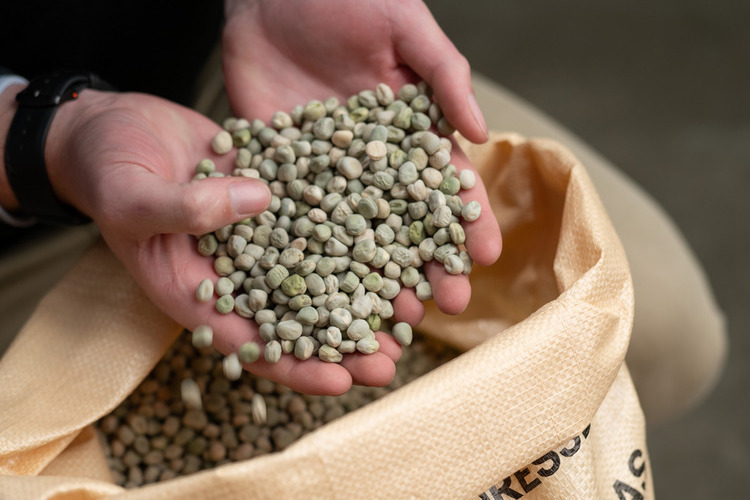
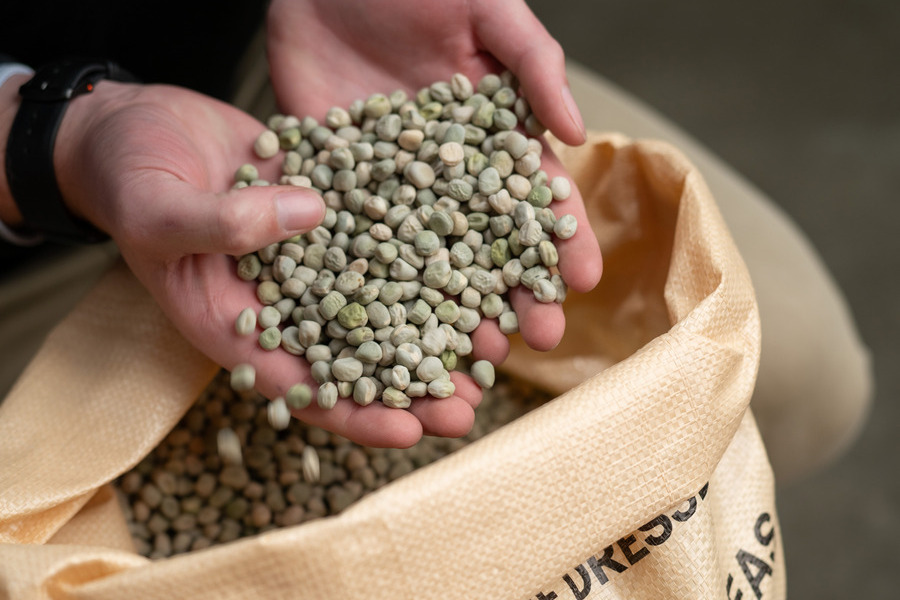
New Zealand food research describes marrowfat peas as large, irregularly shaped field peas with green cotyledons and a wrinkled seed coat. They are harvested at maturity, when their moisture content is much lower than that of fresh garden peas (Ayaquil, 2017).
Allowing the seed to mature and dry changes how it behaves in the kitchen. Mature peas contain more stored starch than young peas. Once soaked and cooked, marrowfat peas soften and develop the thick, floury texture associated with traditional mushy peas.
Are marrowfat peas the same as garden peas, split peas or mushy peas?
No. These terms describe different pea varieties, stages of maturity or forms of preparation.
The important distinction is that mushy peas are a dish, not a separate pea variety. Marrowfat peas are one of the main ingredients used to make that dish.
Split peas also come from mature dried peas, but processing removes the skin and separates the two cotyledons. This gives water easier access to the centre of the pea, so split peas usually cook faster and produce a smoother result than whole marrowfat peas.
Marrowfat pea nutrition per 100g
The most useful figures for consumers are for peas as eaten, not for the dry ingredient before soaking.
The following values are for 100g of canned marrowfat peas that have been reheated and drained. They come from UK food composition data covering ten samples across six brands.
These figures make marrowfat peas a useful source of fibre and plant protein, with very little saturated fat. Their carbohydrate content mostly reflects the starch stored in the mature seed.
Why do nutrition figures vary between sources?
Nutrition figures can appear inconsistent when different food forms are compared.
For example, the same UK composition tables list general dried peas at approximately 303 kcal and 22g of protein per 100g before cooking, but only 109 kcal and 6.9g of protein per 100g after boiling. Cooking does not remove most of the protein. The difference occurs because the peas absorb water, increasing their weight and reducing the concentration of nutrients per 100g.
Prepared products also differ. The same database reports around 81 kcal, 5.8g of protein and 3.1g of fibre per 100g of canned mushy peas, compared with 87 kcal, 6.9g of protein and 5g of fibre for canned, drained marrowfat peas. Added water, salt, sugar and other ingredients can alter the final values.
For the most accurate comparison:
- Check whether the figures describe dry or prepared peas.
- Compare equal serving weights.
- Check the label on canned and flavoured products.
- Pay particular attention to salt in canned peas and to salt and oil in roasted or fried snacks.
What are the main nutritional benefits?
Nutritional information below has been drawn from Navigate Health and Dahl et al., 2012. Please refer to the current manufacturer for the most accurate informaiton.
Plant protein
Prepared marrowfat peas provide approximately 6.9g of protein per 100g in the canned, drained form. This can contribute to total daily protein intake, particularly in meals that use pulses in place of some meat or refined carbohydrate.
Pea protein contains useful amounts of lysine but is relatively lower in some sulphur-containing amino acids, including methionine. This is common among pulses and is one reason a varied diet containing grains, seeds and other protein foods remains important.
Dietary fibre
A 100g serving of canned, drained marrowfat peas contains about 5g of fibre. Pea fibre comes from both the outer seed coat and the internal cell walls. The seed coat is mainly a source of insoluble fibre, while the inner pea contains a mixture of fibre types.
Fibre contributes to normal bowel function. It also changes how quickly starch is digested, although the effect depends on the food structure and how the peas have been processed.
Starch and carbohydrate
Marrowfat peas are starchy because they are allowed to mature before harvest. This is not inherently negative. The starch is eaten alongside protein, fibre and the natural cell structures of the pea.
Research on dry peas indicates that pea starch can include slowly digestible and resistant fractions. However, variety, processing and cooking all influence starch digestibility, so it would be inaccurate to assign one glycaemic effect to every marrowfat pea product.
Vitamins and minerals
Prepared marrowfat peas contribute iron, phosphorus, magnesium, potassium and zinc. They also contain smaller amounts of B vitamins, including thiamin and vitamin B6.
These nutrients should be viewed as part of the overall diet. Pulses also contain phytate, which can reduce the absorption of some minerals, particularly iron and zinc. This is one reason food composition figures should not be treated as proof that the body absorbs every milligram listed.
What does the health research show?
Reviews of pea nutrition have linked the starch, protein and fibre in dry peas with digestive function and a lower glycaemic response than many refined carbohydrate foods. However, the authors also note that long-term human research on pea consumption remains limited and that processing can change the food’s properties (Dahl, et al., 2012)..
A 2024 review identified 30 human studies investigating whole pulses. Most examined mixed pulse diets or foods such as lentils, beans, chickpeas and split peas rather than marrowfat peas alone. The largest body of clinical evidence concerned blood lipids, but results varied by pulse type, study design and diet (Zhao et al., 2024).
The evidence therefore supports a measured conclusion: marrowfat peas have a useful nutritional profile, but they should not be presented as a treatment or as a food with uniquely proven health effects.
How are marrowfat peas used?
Mushy peas are the best-known application, but they are not the only one.
Marrowfat peas may be:
- Cooked whole and added to soups or stews
- Mashed or blended into thick pea purées and dips
- Canned as whole or processed peas
- Ground into flour for savoury food applications
- Fried or roasted for seasoned pea snacks, including wasabi peas
- Used in extruded pulse-based snacks
Food technology research in New Zealand records marrowfat peas being sold as dry seed, flour, canned peas and fried snack ingredients. The final nutritional profile changes with the application. A boiled pea dish will not have the same fat or salt content as a coated fried snack.
Do dried marrowfat peas need soaking?
Whole dried marrowfat peas are normally soaked before cooking. Soaking allows water to move through the seed coat and hydrate the centre, helping the peas cook more evenly.
In one study of New Zealand marrowfat pea lines, water absorption continued to increase between 12 and 24 hours of soaking. The proportion of peas that had not fully hydrated also fell as soaking time increased. This does not establish one universal preparation time, since pea size, age, storage and the intended texture can all affect cooking.
For home preparation:
- Follow the instructions supplied with the dried peas.
- Soak them in sufficient water for the stated time.
- Drain and rinse if directed.
- Cook in fresh water until fully tender.
Canned marrowfat or mushy peas have already been hydrated and cooked. They normally require reheating rather than soaking.
Find more answers
Frequently Asked Questions
Are mushy peas good for you?
Mushy peas can provide protein and fibre, but recipes and canned products vary. UK composition data lists canned mushy peas at about 81 kcal, 5.8g of protein and 3.1g of fibre per 100g. Check the product label for salt, sugar and other added ingredients.
Are marrowfat peas healthy for everyone?
They can suit many eating patterns, but individual requirements differ. Anyone with a pea allergy should avoid them. People following medically prescribed restrictions on fibre, potassium, phosphorus or sodium should use the nutrition label and seek individual advice from an appropriate health professional.
references
Froilan T. Ayaquil (2017). Resolving problems affecting the processing of dried marrowfatpeas for fried foods:Hard-seededness and cooking temperature and time. https://mro.massey.ac.nz/server/api/core/bitstreams/b6e95c54-bb5e-4bca-a4d9-cdf4efb71e0c/content
Navigate Health. Peas, marrowfat, canned, re-heated, drained. https://patient.info/nutrition/foods/peas-marrowfat-canned-re-heated-drained. https://patient.info/nutrition/foods/peas-marrowfat-canned-re-heated-drained
Dahl et al., 2012. Review of the health benefits of peas (Pisum sativum L.). https://www.cambridge.org/core/journals/british-journal-of-nutrition/article/review-of-the-health-benefits-of-peas-pisum-sativum-l/1C97E78717EF51A80A80D4E09A233AE8
Zhao et al, 2024. Pulse Consumption and Health Outcomes: A Scoping Review. https://pmc.ncbi.nlm.nih.gov/articles/PMC11124391/



Quick Navigation
Contact our team

Australia

New Zealand

New Zealand
New Zealand