
What Is Thyme Honey Good For? Benefits, Uses, and Applications
May 20, 2026
Share this post


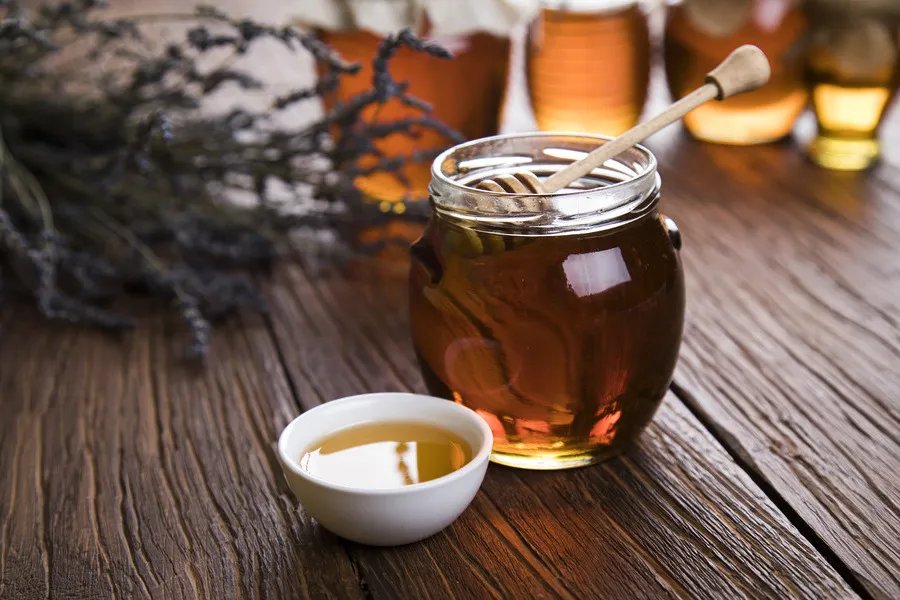
Thyme honey is a monofloral honey valued for its natural components and aromatic properties.
It is used across food, wellness, and skincare applications due to its distinct composition and flavour profile. While many honeys share similar base characteristics, thyme-derived varieties are often noted for their higher phenolic content and more pronounced herbal notes.
As interest in functional and specialty ingredients grows, thyme honey is increasingly being explored for both consumer use and commercial applications.
What Is Thyme Honey?
Thyme honey is a monofloral honey produced from the nectar of the thyme plant (Thymus vulgaris).
It is typically amber in colour and has a distinctive flavour described as herbal, earthy, and slightly spicy. Thyme honey is known for being particularly pungent, often described as the “blue cheese” of honeys due to its bold, acquired taste. This sets it apart from blended honeys, which are sourced from multiple floral origins and tend to have a milder, less defined flavour.
Monofloral honeys like thyme are often selected for their unique flavour profiles and specific functional properties.
Naturally Occurring Properties of Thyme Honey
Thyme honey contains a range of natural compounds that contribute to its functional properties. While research is ongoing, several key areas have been studied.
Antioxidant Properties
Thyme honey contains antioxidants that are studied for their role in oxidation-related processes.
Research into honey and other bee-derived products has explored the presence of naturally occurring phenolic compounds and antioxidants. These compounds are studied for their interaction with free radicals and oxidation-related processes. Oxidative stress is a natural biological process, though prolonged oxidative stress has been associated with cellular damage over time.
All honeys contain antioxidants to some degree, though levels vary depending on floral source.
Antibacterial Properties
Laboratory studies have examined how different honey varieties behave under controlled conditions. These studies explore factors such as acidity, sugar concentration, and naturally occurring compounds found in honey, which may influence how honey interacts with microorganisms in laboratory environments. Thyme honey has attracted interest in this area due to its distinctive chemical profile and naturally occurring plant compounds.
Soothing Coughs and Sore Throats
Honey is commonly used to soothe throat irritation, particularly when added to warm drinks such as tea or lemon water. Its thick texture creates a coating effect, which may help reduce coughing and dryness, making it especially popular during colder months and seasonal changes.
Because of this, it is often used as a simple, supportive option during seasonal illness.
Digestive Support and Gut Health
Like other honey varieties, thyme honey contains naturally occurring sugars and compounds that are being studied for their potential prebiotic properties and possible role in supporting gut microbiota.
Prebiotics are compounds that feed beneficial bacteria in the gut microbiome. A balanced microbiome plays an important role in digestion, immune function, and overall health.
Some studies have explored how honey interacts with beneficial bacteria such as Lactobacillus casei and Lactobacillus rhamnosus in a laboratory setting. These bacteria help create an environment that limits the growth of harmful microbes.
How it supports gut health
- Provides fuel for beneficial gut bacteria
- Supports microbiome balance
- Contributes to an environment less favourable to harmful bacteria
Skincare Applications
Honey is widely used in skincare due to its functional properties.
It can act as a mild exfoliant and help support skin hydration. Its beneficial properties have also led to its use in products designed for acne-prone skin.
Common applications include:
- Lip balms
- Facial cleansers and scrubs
- Moisturising treatments
Immune System Support
Several studies have explored how honey and its naturally occurring compounds may interact with immune pathways under laboratory and experimental conditions.
Research has investigated antioxidant activity, immunomodulatory effects, and the relationship between honey and the gut microbiome, with ongoing interest in how these factors may contribute to overall immune function.
Everyday Uses in Food and Drinks
Thyme honey is a versatile ingredient that can be used across a range of food and beverage applications.
Its herbal and slightly savoury flavour profile makes it particularly suited to dishes that benefit from aromatic complexity.
Ways to use it
- Stir into tea as a natural sweetener
- Drizzle over roasted vegetables
- Use as a glaze for cakes and desserts
- Add to oats, cereals, or toast
- Incorporate into baking, such as scones
When Does It Pair Well?
Its flavour pairs best with foods that are salty, rich, or slightly tangy.
Cheeses
- Goat cheese
- Feta and feta-style cheeses
- Aged cheeses such as pecorino or manchego
- Herb-infused or lightly smoked cheeses
Proteins
- Roast chicken
- Lamb (grilled, roasted, or braised)
- Halloumi
- Salmon
- Slow-cooked meats
Vegetables
- Roasted carrots and parsnips
- Squash varieties
- Brussels sprouts
- Beetroot and sweet potato
- Leafy greens such as kale or chard
Beverages
- Herbal teas (mint, chamomile, lemon balm)
- Ginger infusions
- Warm lemon drinks
- Rooibos or hibiscus teas
Sweets
- Yoghurt with nuts and seeds
- Baked fruit
- Simple cakes
- Honey-roasted nuts
- Light desserts such as panna cotta
Thyme Honey vs Manuka Honey vs Clover Honey
Thyme honey differs from other common varieties in flavour, composition, and application.
- Thyme honey: Herbal, aromatic, moderate-to-high phenolic activity, suited to both culinary and functional use
- Manuka honey: High activity, associated with MGO content, commonly used in wellness and skincare
- Clover honey: Mild flavour, lower activity, widely used as an everyday sweetener
Each type serves different purposes depending on the intended use.
Choosing and Storing Thyme Honey
Choose thyme honey if you are looking for a more aromatic and flavour-driven honey with functional properties.
Store in a cool, dark place at room temperature. Refrigeration is not recommended, as it may accelerate crystallisation. While honey has a long shelf life, it is best consumed within two years for optimal quality.
Safety and Considerations
Honey is a food, not a medicine, and should be used accordingly.
- Do not give honey to infants under 12 months
- Consume in moderation due to natural sugar content
- Seek medical care for serious illness, infections, or wounds
What This Means for Food, Skincare, and Wellness Brands
Thyme honey presents opportunities beyond direct consumption.
Its combination of flavour, bioactive compounds, and natural positioning makes it suitable for:
- Functional food products
- Skincare and cosmetic formulations
- Premium honey blends
- Beverage applications
- Health-focused product lines
For manufacturers and retailers, it offers a differentiated ingredient that aligns with clean-label trends and growing consumer interest in functional foods.
As a New Zealand honey producer supplying both branded and private-label markets, Midlands Apiaries works with partners globally to provide honey suited to retail, foodservice, and ingredient applications.
Find more answers
Frequently Asked Questions
What is thyme honey good for?
Thyme honey can be enjoyed as a natural sweetener in food and drinks, while also being valued for its antioxidant properties, distinct herbal flavour, and use in wellness and skincare applications.
Can thyme honey help with coughs and sore throats?
It may help soothe irritation due to its coating effect and natural properties.
Does thyme honey support gut health?
It may support gut health by acting as a prebiotic and feeding beneficial bacteria.
What foods pair well with thyme honey?
It pairs well with cheeses, roasted vegetables, meats, yoghurt, and herbal teas.
What does thyme honey taste like?
Thyme honey has a strong, aromatic, slightly savoury flavour with herbal notes. It works beautifully with roasted meats, cheese, and Mediterranean dishes. Its bold profile is ideal for specialty private label honey brands and culinary-focused retail products.
references
Auckland University of Technology. (n.d.). Antibacterial activity of New Zealand honeys.
https://openrepository.aut.ac.nz/items/de410105-767a-45b3-9588-f85eb34da7b7
National Center for Biotechnology Information. (2017). Honey: Its medicinal property and antibacterial activity. https://www.ncbi.nlm.nih.gov/pmc/articles/PMC5424551/
World Health Organization. (2014). WHO guidelines for the common cold and cough. https://www.who.int/publications/i/item/9789241549950
Mayo Clinic. (2023). Honey: An effective cough remedy? https://www.mayoclinic.org/diseases-conditions/common-cold/expert-answers/honey/faq-20058031
Harvard Medical School. (n.d.). Antioxidants in depth. https://www.health.harvard.edu/staying-healthy/antioxidants-in-depth
European Food Safety Authority. (n.d.). Scientific opinions on food compounds and health. https://www.efsa.europa.eu/
PubMed. (n.d.). Honey antimicrobial and phenolic compound studies. https://pubmed.ncbi.nlm.nih.gov/
Taylor & Francis Online. (2016). Phenolic compounds in honey and their associated health benefits.
https://www.tandfonline.com/doi/full/10.1080/10942912.2016.1188307#d1e276
Cochrane. (2018). Honey for acute cough in children. https://www.cochranelibrary.com/
Pizzino, G., Irrera, N., Cucinotta, M., Pallio, G., Mannino, F., Arcoraci, V., Squadrito, F., Altavilla, D., & Bitto, A. (2017). Oxidative stress: Harms and benefits for human health. Oxidative Medicine and Cellular Longevity, 2017, 8416763. https://pmc.ncbi.nlm.nih.gov/articles/PMC5551541/
Masad, R. J., Abu-Harirah, H., & others. (2021). The immunomodulatory effects of honey and associated flavonoids in cancer. Nutrients, 13(4), 1269. https://pmc.ncbi.nlm.nih.gov/articles/PMC8069364/
Sánchez-Martín, V., Escuredo, O., Seijo, M. C., & Rodríguez-Flores, M. S. (2022). Enhancement of the antioxidant capacity of thyme and chestnut honey by addition of bee products. Foods, 11(19), 3118.
https://www.mdpi.com/2304-8158/11/19/3118
Burlando B, Cornara L. Honey in dermatology and skin care: a review. J Cosmet Dermatol. 2013 Dec;12(4):306-13. https://doi.org/10.1111/jocd.12058
Hadi, H., Syed Omar, S. S., & Awadh, A. I. (2016). Honey, a gift from nature to health and beauty: A review. British Journal of Pharmacy, 1(1), 46-54. https://doi.org/10.5920/bjpharm.2016.05
Mayo Clinic. (2024). Honey: An effective cough remedy?
https://www.mayoclinic.org/diseases-conditions/common-cold/expert-answers/honey/faq-20058031



Quick Navigation
Contact our team

Australia

New Zealand

New Zealand

Tasman Walker
BCom (Mktg) | BSc (Psy)
Honey Sales - Asia & Australia
Midlands Apiaries
+64 27 237 6318honey@midlands.co.nz
Nick Kerr
BCom (Hons)
Honey Sales - North America & Europe
Midlands Apiaries
+64 27 807 9849honey@midlands.co.nz
Hamish Finnie
BSc (Food Sc. & Hum. Nutr.)
Honey Sales - Greater China Region
Midlands Apiaries
+64 27 405 1273honey@midlands.co.nz


_Website_-_Resources_Card_750x500.webp)
%205_Website_-_Resources_Card_750x500.webp)



