What Is a Good UMF Rating for Manuka Honey?
July 29, 2026
Share this post


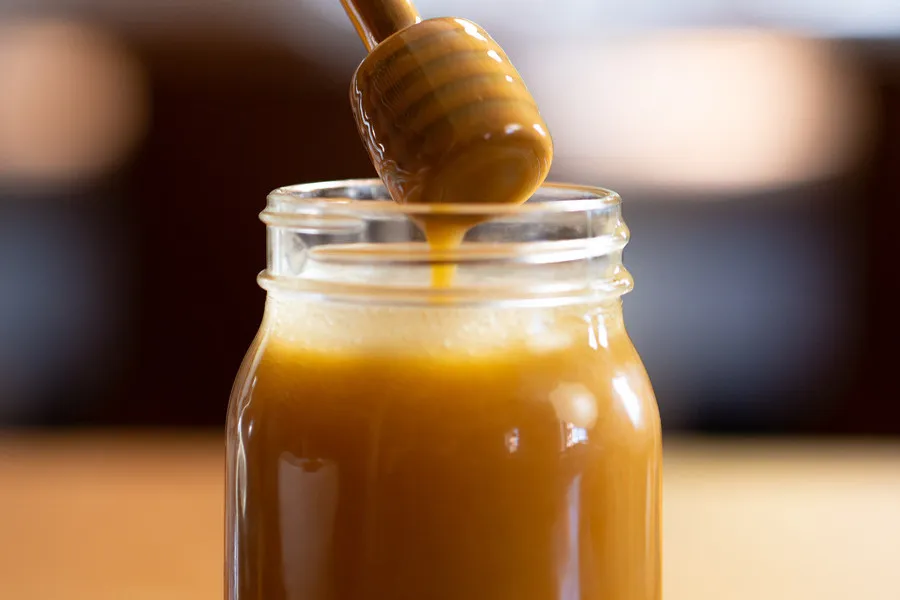
For most buyers, UMF™ 10+ is a good all-round Mānuka honey rating. It offers a recognised mid-range option for a core retail product or an everyday premium jar. UMF 15+ and above may suit higher-value ranges. The best rating depends on price, customer expectations, documentation and product positioning.
For consumers, UMF 10+ is often a straightforward place to begin. For distributors, retailers and private-label brands, it can work as a core SKU between entry-level and premium products.
There is no single UMF rating that is best for every buyer. A suitable grade should fit the intended market, product format, price point and supply requirements.
Important: UMF is a quality-assurance and grading system. It should not be used to imply that honey treats, prevents or cures a health condition.
Key takeaways
- UMF 10+ is a practical all-round choice for many consumer and commercial programmes.
- UMF 5+ can suit accessible or value-led product ranges.
- UMF 15+ and UMF 20+ are more suitable for premium retail, gifting and specialist product lines.
- UMF 25+ and above are high-premium options that need strong market fit and product positioning.
- Choose a grade using more than the front-label number: check testing, traceability, origin, supply continuity and price.
What does a UMF rating mean?
UMF stands for Unique Mānuka Factor. It is a New Zealand Mānuka honey quality-assurance and grading system managed by the Unique Mānuka Factor Honey Association.
A UMF rating brings together four tested factors:
- MGO - methylglyoxal.
- Leptosperin - a marker associated with Mānuka nectar.
- DHA - dihydroxyacetone, which supports expected MGO development over shelf life.
- HMF - hydroxymethylfurfural, used as a freshness indicator.
This is why UMF is not the same as MGO. MGO measures one compound, while UMF assesses several factors within its certification framework.
For a fuller explanation, link to Midlands’ guide to What Does UMF Mean?
What is a good UMF rating for Mānuka honey?
For many buyers, UMF 10+ is a good core rating.
It offers a clear step up from entry-level Mānuka honey while remaining more accessible than high-premium grades. This makes it a practical option for retailers, distributors and private-label brands that need broad consumer appeal.
The table below is a product-positioning guide. It is not medical advice or an official rule for choosing Mānuka honey.
Midlands supplies bulk and wholesale Mānuka honey across UMF grades from UMF 5+ to UMF 31+, with other options available on request. Retail-ready Midlands ranges include selected higher grades, depending on product format and availability.
Is UMF 10+ a good choice?
Yes. UMF 10+ is often a sensible all-round choice for customers who want a clearly graded Mānuka honey without moving immediately into higher premium price points.
For commercial buyers, it can work well as the centre of a tiered range. It is simple to explain, supports a premium product position and can appeal to a wide group of customers.
UMF 10+ may be a good fit when you need:
- A core product for a retail Mānuka honey range.
- A recognisable grade for a private-label launch.
- A balanced option between accessible and premium pricing.
- A product that can sit alongside UMF 5+ and UMF 15+ options.
When should you choose UMF 15+, 20+ or higher?
Higher UMF grades can support premium product lines, but they should match a clear commercial purpose.
UMF 15+: a premium step-up
UMF 15+ can suit brands and retailers looking to add a stronger premium tier above a UMF 10+ core product. It can work well in premium grocery, gift ranges and specialist retail.
UMF 20+: for high-premium positioning
UMF 20+ may suit buyers developing a more selective, high-value range. It is best considered whether the target market understands Mānuka grading and is prepared to pay for a higher-grade product.
UMF 25+ and above: for specialist or luxury ranges
Higher grades can be appropriate for limited editions, premium gifting and specialist distribution. They need careful pricing, clear documentation and realistic demand planning.
A higher UMF rating is not automatically the right choice. A well-positioned UMF 10+ product may perform better than a higher-grade product that does not fit the market.
Availability should also be considered. Mānuka honey is a natural product, so supply varies between harvests and seasons. Higher grades are produced in smaller quantities, with availability becoming increasingly limited at UMF 25+ and particularly at UMF 31+ and above. Buyers considering these grades may need to plan earlier, confirm available volumes and allow for greater variation in supply, pricing and lead times.
How should commercial buyers choose a UMF grade?
Choose the grade that matches the role the product will play in your range.
1. Start with the target customer
Consider whether your customer is looking for:
- An accessible Mānuka honey product.
- A core premium jar.
- A giftable premium product.
- A specialist or ultra-premium product.
This helps you decide whether UMF 5+, 10+, 15+ or a higher rating is most appropriate.
2. Build a clear product ladder
A simple three-tier range might include:
- UMF 5+ as an accessible option.
- UMF 10+ as the core product.
- UMF 15+ or 20+ as a premium option.
This gives customers a clear choice without making the range unnecessarily complex.
3. Check the evidence behind the grade
Before purchasing or launching a product, request:
- Batch-specific certificates of analysis.
- UMF certification details where applicable.
- Lot and traceability information.
- Origin and packing information.
- Product specifications and shelf-life guidance.
- Packaging, labelling and market-compliance support.
For honey labelled as Mānuka for export from New Zealand, the Ministry for Primary Industries requires testing against its Mānuka honey definition. This uses five attributes: four chemical markers and one DNA marker.
UMF vs MGO: which should buyers use?
UMF and MGO can both appear on Mānuka honey packaging, but they answer different questions.
A product may display both a UMF rating and an MGO figure. However, UMF should not be treated as a simple conversion from MGO because it assesses more than one factor.
For comparison shopping, use the product’s own label and batch documentation. For sourcing decisions, review the full product specification rather than relying on a single number.
Why UMF is only part of a good buying decision
A UMF rating is useful, but it is not the only factor that matters.
For consumers, the right product may depend on taste, budget, jar size and confidence in the brand.
For commercial buyers, the decision should also include:
- Reliable supply at the required grade.
- Country-of-origin and traceability records.
- Product format and packaging options.
- Minimum order quantities and lead times.
- Destination-market requirements.
- Clear and compliant product claims.
- Batch testing and technical documentation.
This is especially important for private-label Mānuka honey, where product selection needs to support both brand positioning and long-term supply.
How Midlands can support Mānuka honey buyers
Midlands works with distributors, retailers and private-label brands seeking certified, traceable New Zealand Mānuka honey.
Whether you need an accessible UMF 5+ product, a core UMF 10+ line or a higher-grade premium option, the right choice starts with your market, target price and product requirements.
Talk to Midlands about bulk and wholesale Mānuka honey, private-label options, retail-ready formats and product documentation.
Find more answers
Frequently Asked Questions
What is a good UMF rating for Manuka honey?
For many buyers, UMF 10+ is a good all-round option. It suits core retail, gifting and private-label ranges, balancing a recognised grade with accessible premium positioning.
Is UMF 10+ good Mānuka honey?
Yes. UMF 10+ is a recognised mid-range Mānuka honey grade. It can suit everyday premium buyers and commercial ranges needing broad customer appeal.
Is UMF 15+ better than UMF 10+?
UMF 15+ is a higher grade, but it is not always the better choice. UMF 10+ may offer better value, while UMF 15+ can suit premium retail or gifting.
Is UMF the same as MGO?
No. MGO measures methylglyoxal, while UMF is a wider quality-assurance system that assesses MGO alongside other factors, including DHA, leptosperin and HMF.
Does a UMF rating prove Mānuka honey is authentic?
Not on its own. Buyers should also check batch records, certification, origin details and traceability. New Zealand export Mānuka honey must meet separate MPI authenticity-testing requirements.
references
Unique Mānuka Factor Honey Association. (n.d.). Unique Mānuka Factor (UMF) Grading System Explained. Available at: https://www.umf.org.nz/unique-manuka-factor/ (Accessed: 23 June 2026).
Ministry for Primary Industries. (2025). Ensuring mānuka honey is authentic. New Zealand Government. Available at: https://www.mpi.govt.nz/food-business/honey-bee-products-processing-requirements/manuka-honey-testing/ (Accessed: 23 June 2026).
Unique Mānuka Factor Honey Association. (n.d.). UMF Certification Comparison. Available at: https://www.umf.org.nz/umf-comparison/ (Accessed: 23 June 2026).



Quick Navigation
Contact our team

Australia

New Zealand

New Zealand

Tasman Walker
BCom (Mktg) | BSc (Psy)
Honey Sales - Asia & Australia
Midlands Apiaries
+64 27 237 6318honey@midlands.co.nz
Nick Kerr
BCom (Hons)
Honey Sales - North America & Europe
Midlands Apiaries
+64 27 807 9849honey@midlands.co.nz
Hamish Finnie
BSc (Food Sc. & Hum. Nutr.)
Honey Sales - Greater China Region
Midlands Apiaries
+64 27 405 1273honey@midlands.co.nz